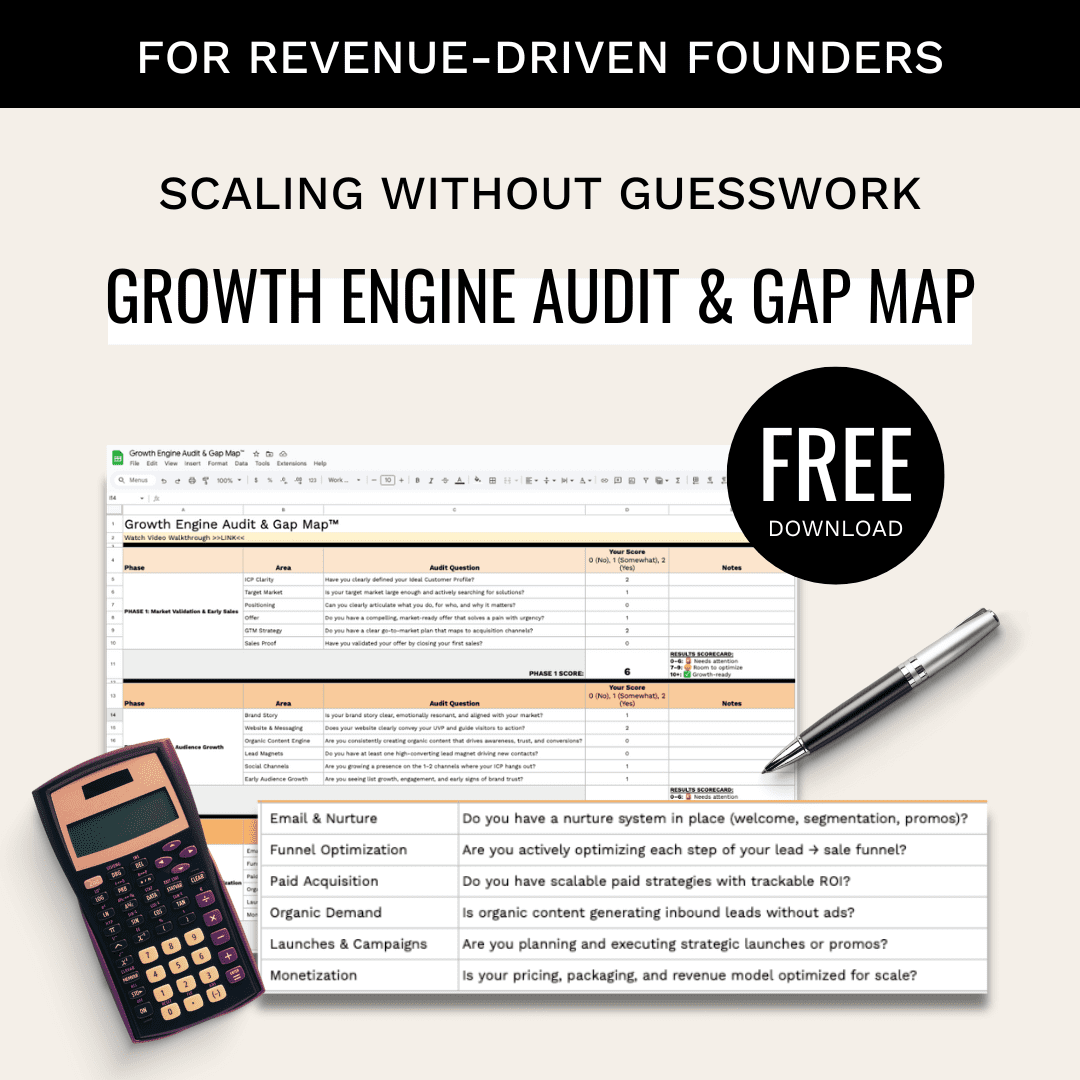

If you’re a startup founder, your 2026 growth plan shouldn’t ride on guesswork or a flashy ad campaign. It should ride on a systematic, measurable customer acquisition engine, and that’s what GTM engineering consultants build. They design data-driven revenue systems that scale, so you grow without burning resources on tactics that never compound.
Below are the top 10 GTM engineering consultants for 2026, what each one is best at, and how to choose the right one for your stage and model.
What You’ll Learn
- How GTM Engineering works: It’s not traditional marketing. Think testable, trackable, scalable systems that prioritize revenue over vanity metrics.
- Who’s on the list: The top 10 GTM Engineering consultants for 2026, like Lillian Pierson (Data-Mania) and GrowthOps Collective, who specialize in B2B SaaS, AI, and marketplace startups.
- How to choose the right partner: Look for consultants who align with your growth stage, understand your market, and deliver systems tied directly to revenue.
Quick Takeaways
- GTM Engineering is like coding for growth – hypotheses are tested, results are measured, and systems are optimized for predictable outcomes.
- The best consultants act as fractional growth partners, integrating with your team to create repeatable customer acquisition systems.
- Avoid red flags: Skip consultants who focus on vanity metrics or offer one-size-fits-all solutions. Instead, choose those who prioritize ROI and measurable results.
Why This Matters
Hiring the right GTM Engineering consultants can mean the difference between scaling efficiently or burning through cash. You’ll get frameworks that deliver real revenue growth, not just traffic or engagement. Ready to dive in? Let’s look at the top players and how they can help.
WTF is GTM Engineering? Everything You Need to Know Before Hiring One in 2025
What Is GTM Engineering?
GTM Engineering focuses on designing, testing, and scaling reliable systems for customer acquisition. Unlike traditional marketing, which often revolves around creative campaigns and trend-chasing, GTM Engineering treats growth as a technical discipline. It employs structured frameworks, rigorous testing, and measurable outcomes to build systems that integrate product marketing, growth strategies, and technical operations – all aimed at driving revenue. This systematic approach highlights how GTM Engineering stands apart from traditional marketing methods.
How GTM Engineering Differs from Traditional Marketing
The distinction between GTM Engineering and traditional marketing lies in their core priorities and methodologies:
- Traditional marketing relies heavily on campaigns, often following trends or new platforms. Success is typically measured by metrics like reach, impressions, and engagement. The focus is on creative storytelling and brand awareness, with revenue often seen as an indirect result.
- GTM Engineering, on the other hand, is systematic and data-driven. Every decision is grounded in measurable frameworks, with strategies designed for scalability and a direct link to revenue. Instead of asking, "How many people saw this ad?" it asks, "How many qualified leads moved through the system and became paying customers?"
This approach speaks directly to technical founders, as it mirrors the precision of coding. Hypotheses are tested, results are measured, and strategies are iterated based on data. By optimizing conversion funnels, reducing customer acquisition costs, and increasing lifetime value, GTM Engineering eliminates guesswork and focuses on scalable outcomes.
The Strategic Focus on ROI and Revenue
At its core, GTM Engineering prioritizes return on investment over superficial metrics. While traditional marketing might celebrate a spike in website traffic, GTM Engineering zeroes in on the small percentage of visitors who convert into leads and paying customers.
This revenue-first mindset ensures every strategy comes with clear accountability. GTM Engineering crafts strategies and builds measurable, scalable systems. These systems are designed to work whether you’re allocating $1,000 or $100,000 per month.
Predictability is another key feature. GTM Engineering creates engines for sustained growth, whether through automated email sequences to nurture leads, content systems that attract qualified prospects, or product-led growth loops that turn users into advocates.
For startups with tight budgets and timelines, this systematic approach minimizes waste and maximizes impact. Every dollar and every hour is spent with one goal in mind: driving revenue, not just generating activity.
1. Lillian Pierson, P.E. – Founder of Data-Mania
📍 Houston, TX 🔗 data-mania.com
I’ll start with my own practice, since I built this list. I combine the precision of an engineer with the instincts of a marketer to build go-to-market strategies that hold up under scrutiny. As a licensed Professional Engineer and the founder of Data-Mania, I design growth systems that are as predictable and measurable as well-written code.
What Makes Me Stand Out
My focus is product-led growth and AI-driven lead generation, and I’m at my best on pre-revenue GTM validation, helping you test and sharpen your market strategy before you pour resources into an unproven idea. I treat positioning and monetization as engineering problems, solved through methodical testing until the most profitable path is clear. With more than 2 million professionals trained in data and AI, and organic channels I’ve grown past 750,000 followers, I bring both the systematic testing and the reach that early-stage growth needs.
Tailored for Tech Startups
I work with a clear focus: seed to Series A tech startups with $0 to $6M in ARR, especially in B2B SaaS, AI, and marketplace platforms. My work lands best with analytical, systems-driven founders, often building outside the usual VC hubs of San Francisco and New York. Startups at this stage need someone who can balance strategy with hands-on execution, without the bloated agency fees or the generic advice that ignores what makes your business specific.
Proven Frameworks for Growth
I’ve developed proprietary systems like the ACT Method and the Minimum Viable Growth System, which treat growth as a structured engineering challenge ahead of a guessing game. They’ve driven real results for the startups I work with, from multiplying email lists to large jumps in organic traffic, while shifting spend away from costly paid ads toward durable inbound. Finetooth’s founder ran the productized offer I engineered to 8 contracts and $350K ARR in 10 months at a 67.7% profit margin, which is the real test of a framework: it holds up when someone else runs it. And because I work as a fractional CMO, I don’t just consult from the sidelines. I join the team, build the systems, and own the execution, which is where most growth plans quietly fall apart.
Why Technical Founders Trust Me
My engineering mindset means every initiative is backed by validation, not vague metrics like brand awareness that never tie back to revenue. When I propose a scalable system, I can show you the data architecture underneath it. When I recommend a channel, I’ve already mapped the funnel and found the optimization points. That combination of technical fluency and a track record spanning Fortune 100 companies and early-stage startups is why systems-driven founders bring me in. I move at startup speed with the strategic depth of enterprise thinking, and that’s the heart of GTM engineering: growth grounded in data and built to last.
2. GrowthOps Collective

📍 United States (Remote-First)
🔗 growthopscollective.com
GrowthOps Collective takes inspiration from Lillian Pierson’s approach of integrating technical discipline into go-to-market strategies. They focus on building scalable systems for customer acquisition, designed to deliver consistent and predictable revenue. Their expertise lies in crafting systematic engines that combine automation, CRM workflows, and data-driven revenue operations.
Technical Systems Architecture
What makes GrowthOps Collective stand out is their expertise in full-funnel analytics and workflow automation. They design robust technical ecosystems using tools like Salesforce, HubSpot, Clay, Zapier, Outreach, and Marketo. By leveraging low-code automation and CRM integration, they ensure seamless tracking and automation that scales efficiently without adding manual workload. This approach allows startups to expand their outreach efforts without needing to grow their team at the same rate – an essential benefit for resource-conscious companies. These systems form the backbone of measurable gains in customer acquisition metrics.
Proven Results in Acquisition Metrics
The impact of GrowthOps Collective’s methods is reflected in their results. For example, in Q2 2023, they helped a B2B SaaS company achieve a 50% drop in customer acquisition costs (CAC) and a 2.5× boost in lead-to-customer conversion rates within just six months. Similarly, in early 2024, they worked with a tech-enabled services company to create a scalable acquisition system, resulting in a 40% reduction in CAC and a 3× improvement in conversion rates over half a year. Across their client base, companies typically see 40-60% reductions in CAC after adopting their frameworks.
Who Thrives with GrowthOps Collective
GrowthOps Collective is best suited for early- to growth-stage B2B SaaS startups looking to scale their revenue operations and establish a solid technical growth structure. They excel at helping companies transition from scattered growth efforts to structured, repeatable systems, offering a more efficient alternative to traditional agencies.
Their approach resonates most with data-driven founders who prioritize analytics and need sustainable, scalable growth. These clients understand that long-term success requires thoughtful, systematic strategies rather than short-term fixes. This shared mindset creates the foundation for meaningful, cost-effective outcomes.
Collaborative and Flexible Engagement
GrowthOps Collective works closely with client teams, offering project engagements typically ranging from $10,000 to $50,000. They provide both project-based and retainer options, giving startups flexibility to choose what aligns with their goals and budget.
The firm has earned a 4.8/5 rating on Clutch.co, with clients frequently praising their actionable strategies, hands-on execution, and ability to deliver measurable results. Reviews often highlight their knack for creating frameworks that lead to tangible improvements in acquisition metrics, steering clear of vague, theoretical advice.
3. RevEngine Partners
📍 San Francisco, CA (Remote-Friendly)
🔗 revenginepartners.com
RevEngine Partners brings an engineering approach to revenue generation, focusing on building scalable, data-driven systems. Their strategy revolves around creating integrated frameworks that align seamlessly with key stages of the customer journey. This helps businesses move away from scattered tactics toward a more structured path to growth.
By applying a systematic design philosophy, RevEngine Partners collaborates closely with technical teams to develop clear, testable frameworks. These frameworks are treated like software cycles – complete with defined specifications, rigorous testing, and regular updates to ensure continuous optimization. Their method is ideal for companies looking to implement a more structured and measurable approach to driving revenue.
What sets RevEngine Partners apart is their ability to treat revenue processes like software development – methodically designed, thoroughly tested, and continuously refined to deliver better results over time.
4. LaunchLab Consulting

📍 Austin, TX (Remote-Friendly)
🔗 launchlabconsulting.com
Specialties:
- Product launch orchestration
- Implementation of the Launch Velocity Framework
- Integrated team execution
- Fast market validation
- customer acquisition strategies for B2B
ICP Fit:
LaunchLab Consulting is a great match for B2B SaaS startups, AI-driven product companies, and marketplace platforms. They primarily work with businesses in the Seed to Series B stage, typically generating $500K–$10M in annual recurring revenue (ARR).
LaunchLab Consulting takes an engineering-first approach to product launches. Their Launch Velocity Framework organizes go-to-market (GTM) execution into clear, actionable phases: market research, defining the ideal customer profile (ICP), refining the unique value proposition (UVP), testing channels, and building scalable acquisition systems. This structured, data-driven process reduces launch risks and speeds up the path to product-market fit, setting clients up for measurable success.
Their approach aligns with the principles of GTM Engineering, emphasizing methods that are systematic, testable, and scalable.
Why They Stand Out:
LaunchLab creates strategies and embeds directly with client teams to implement them. By integrating sales, marketing, and product data, they ensure that every piece of the GTM puzzle works together seamlessly. They also leverage tools like HubSpot, Marketo, Mixpanel, and automation platforms like Zapier to optimize workflows and enable data-driven decisions.
A standout example of their success: In 2025, LaunchLab applied their Launch Velocity Framework to help a Series A SaaS company achieve a 3x increase in qualified pipeline and cut customer acquisition costs (CAC) by 40% – all within just 90 days. This case highlights their ability to deliver efficient, measurable results that align with startup growth priorities.
Ideal If You’re Looking For:
- A framework-driven approach to launch execution
- Hands-on team integration and coordination
- Rapid testing with clear, measurable results
- A partner focused on building repeatable, scalable systems
LaunchLab also helps clients avoid common launch mistakes, like poorly defined ICPs or UVPs, overspending on unproven channels, and tracking vanity metrics instead of revenue-focused KPIs. Their structured process ensures that every aspect of a launch is designed for testing, scalability, and long-term growth.
5. ScaleSmart Strategies
ScaleSmart Strategies specializes in guiding B2B SaaS and tech-enabled service companies through pivotal growth phases.
📍 Denver, CO (Remote-Friendly)
🔗 scalesmartstrategies.com
Focused on businesses progressing from Series A to Series C funding, ScaleSmart Strategies helps tackle the challenges of complex sales cycles and transitions from founder-led operations to scalable revenue systems. Their expertise ensures companies are equipped to grow efficiently during these critical stages.
6. GTM Architects
GTM Architects specializes in crafting structured and scalable go-to-market (GTM) systems. Unlike consultants who zero in on campaign tactics, their approach centers on designing processes that transform customer acquisition into a predictable, revenue-generating machine. Their focus lies in building frameworks that drive consistent results.
Core Expertise:
- Building structured GTM frameworks
- Integrating CRM and marketing automation tools
- Optimizing revenue operations (RevOps) and analytics
- Aligning sales and marketing teams
- Using AI for lead scoring and segmentation
Technical Know-How That Counts:
GTM Architects makes use of tools like Salesforce, HubSpot, Marketo, Outreach, Zapier, and Clay, alongside AI-powered solutions for lead scoring and segmentation. Their process starts with a detailed evaluation of your business model, ideal customer profile (ICP), and tech stack. From there, they create a customized framework tailored to your needs – whether you’re a startup seeking quick validation or a growing company refining intricate sales funnels. This meticulous approach ensures their systems are built to deliver measurable results.
Proven Results:
Their strategies have delivered real outcomes. For instance, they recently worked with a B2B SaaS startup to overhaul its lead acquisition and nurturing processes. By implementing a unified CRM and marketing automation stack, the company achieved a 40% increase in qualified leads and cut customer acquisition costs by 25% in just six months. This success was driven by workflow automation, real-time analytics dashboards, and continuous A/B testing of messaging and channels, creating a more reliable and scalable revenue engine.
Best Fit For:
GTM Architects is ideal for B2B SaaS companies, AI startups, and tech-focused organizations at the seed or growth stages. They cater especially well to technical founders who value structured, testable, and data-driven growth strategies.
What Sets Them Apart:
They prioritize revenue-driving KPIs like customer acquisition cost (CAC), customer lifetime value (CLTV), lead-to-customer conversion rates, and sales cycle velocity. Instead of focusing on vanity metrics, they concentrate on what impacts your bottom line.
To ensure long-term success, GTM Architects also provides detailed playbooks, technical documentation, and training sessions, empowering your team to maintain and adapt the systems after their engagement.
Perfect For Companies Seeking:
✅ Repeatable, scalable GTM processes
✅ Seamless integration across tech stacks
✅ Data-driven insights and real-time analytics
✅ Strong collaboration between sales and marketing teams
7. Pipeline Builders
Pipeline Builders specializes in GTM engineering, honing in on refining sales pipelines to help businesses turn prospects into loyal customers. Their approach underscores the increasing emphasis on efficient, revenue-focused strategies in today’s competitive environment. While the specifics of their methods are kept confidential, their dedication to simplifying and improving the conversion process sets them apart in the GTM engineering field. To learn more, visit pipelinebuilders.com.
8. MarketCraft Growth Advisors
MarketCraft Growth Advisors specializes in creating structured go-to-market (GTM) systems aimed at delivering consistent and measurable revenue metrics for growth through well-integrated frameworks. This approach helps founders overcome common go-to-market bottlenecks that often hinder scaling.
For more information about their expertise, target clients, and strategic methodologies, check out their website.
9. Traction Systems Consulting
Traction Systems Consulting takes a more discreet approach compared to firms that emphasize detailed performance metrics and benchmarks. Publicly available information about their methods and services is quite limited. This lack of transparency makes it difficult to assess if they utilize modern roles like the AI GTM engineer to drive growth. For more details, you can explore their website at tractionsystems.co.
10. RevenueWorks

📍 San Francisco, CA
🔗 revenueworks.io
RevenueWorks brings a structured, data-driven approach to solving revenue challenges, treating growth like an engineering problem with clear inputs and measurable outputs.
Specialties:
- Revenue optimization frameworks
- Growth system automation
- Conversion funnel engineering
- Customer lifecycle mapping
- Performance analytics integration
ICP Fit:
They work primarily with Series A to Series B SaaS companies generating $2M-$15M ARR. Their approach is best suited for startups that have achieved product-market fit but are struggling to establish consistent revenue growth and need systematic strategies to scale their customer acquisition efforts.
Why They Stand Out:
RevenueWorks doesn’t settle for vanity metrics. They focus on creating "Revenue Operating Systems" – integrated frameworks designed to connect marketing efforts directly to revenue outcomes. By identifying and addressing revenue leaks across the customer journey, they implement scalable conversion rate optimization strategies. Their expertise in advanced attribution models helps startups pinpoint which channels and interactions drive paying customers, not just traffic.
Process Overview:
The process kicks off with a focused Revenue Audit, mapping out all customer touchpoints and implementing advanced attribution models. From there, they optimize conversion funnels to tie every marketing activity to revenue results. Custom dashboards are built to track leading indicators of growth, moving beyond lagging metrics like MRR vs ARR. This method aligns closely with GTM Engineering principles, ensuring every step is precise and accountable.
Ideal If You’re Looking For:
- Revenue-focused optimization across the entire funnel
- Advanced analytics that connect marketing to revenue
- Scalable systems to minimize reliance on manual processes
Best For Startups That:
Have a strong product-market fit but face inconsistent revenue growth, struggle with attribution, or need to professionalize their growth operations as they prepare for Series B funding. RevenueWorks is particularly effective for analytically-minded founders who value data-driven strategies and are ready to invest in advanced tracking and optimization tools. Companies with dedicated marketing operations or technical co-founders will find their approach especially seamless, as some technical integration is required.
How to Choose Between GTM Engineering Consultants
Selecting the right GTM Engineering consultant can significantly influence your startup’s growth path. Avoid those who rely on generic strategies – opt for a partner who can create a system that scales your revenue effectively.
Start with proven frameworks, not flashy presentations. The best GTM Engineering consultants don’t just promise growth; they show you how they’ll achieve it. Look for those who can clearly explain their customer acquisition frameworks without resorting to jargon or buzzwords.
Ensure alignment with your business model and stage. A consultant who excels with Series B SaaS companies may not be the right fit for a pre-revenue AI startup. Your ideal partner should have hands-on experience with businesses at your stage and in your market. They need to understand your sales cycles, customer acquisition costs, and the specific growth hurdles you face.
Prioritize technical and strategic fluency. GTM Engineering is a blend of technical expertise and strategic insight. The right GTM Engineering consultants will be skilled in areas like funnel optimization, attribution models, and data-driven decision-making, balancing both product management and performance marketing mindsets.
Look for speed of execution paired with strategic oversight. Startups don’t have the luxury of waiting through lengthy strategy phases. Choose a partner who can deliver measurable results quickly while keeping an eye on long-term growth. The best GTM Engineering consultants operate like fractional executives, providing both immediate wins and strategic direction.
Focus on accountability for revenue outcomes. Avoid consultants who emphasize traffic or engagement without tying their efforts to revenue. GTM Engineering specialists focus on metrics like reducing customer acquisition costs, improving conversion rates, and driving revenue growth. Ask about their track record with these outcomes. If they shy away from being evaluated on business results, consider it a warning sign.
Red Flags to Avoid
Buzzwords without substance. A consultant with a flashy website but no detailed case studies or frameworks is a red flag. The best GTM Engineering experts let their results speak for themselves, often presenting their work in straightforward, no-frills ways.
Agencies that focus on vanity metrics. If a consultant can’t clearly explain how their work impacts your bottom line, they’re likely prioritizing metrics like traffic or engagement over revenue. True GTM Engineering ties every action directly to measurable revenue outcomes.
Generic strategies. A one-size-fits-all approach won’t work. Consultants who don’t take the time to understand your customer base, sales process, and competitive environment are unlikely to deliver effective solutions. Look for someone who asks detailed, thoughtful questions before offering recommendations.
Limited technical expertise. A consultant who can’t integrate with your tech stack or set up proper tracking and attribution will hinder your growth. GTM Engineering depends on seamless collaboration between marketing, sales, and product data, often leveraging data science in marketing attribution models to drive growth.
The right GTM Engineering consultant should feel like an extension of your founding team. They’ll understand your vision, work at your pace, and build systems that grow alongside your business. Their frameworks, experience, and approach will play a pivotal role in shaping your startup’s success. Up next, explore what it’s like to work with a GTM Engineering partner.
What Working With a GTM Engineering Partner Should Look Like
Collaborating with a GTM Engineering partner is like bringing on a strategic co-founder who’s laser-focused on both immediate execution and building systems that scale. This relationship blends short-term action with long-term planning, creating a growth engine that evolves alongside your business.
Scope of Work: Building Your Revenue Architecture
Your GTM Engineering partner will tackle four key areas that directly impact revenue:
- Defining your Ideal Customer Profile (ICP): They’ll analyze customer behaviors and identify pain points to pinpoint exactly who your product serves best.
- Clarifying your Unique Value Proposition (UVP): By positioning your product as the solution to specific problems, they’ll test messaging across channels and customer groups to find what drives conversions.
- Designing acquisition systems: This involves creating repeatable processes for attracting, nurturing, and converting leads. Think content strategies, lead magnets, email sequences, and sales tools – all designed to run efficiently with minimal manual input.
- Optimizing recurring revenue processes: From onboarding to upselling and retention, they’ll design strategies to maximize customer lifetime value and turn one-time buyers into loyal, repeat customers.
Next, let’s break down what the first 90 days of this partnership typically look like.
The First 90 Days: What to Expect
Days 1–30: Foundation and Discovery
The first month is all about understanding your current GTM strategy. Your partner will conduct a thorough audit and deliver a GTM Strategy Blueprint. This document will refine your ICP, messaging, and acquisition channels, serving as the guide for future growth.
Days 31–60: System Implementation
In the second month, it’s time to put the plan into action. Your consultant will set up tracking tools, create content and messaging assets, and establish lead generation and nurturing systems. As these new systems go live, you’ll start to notice measurable improvements in targeting and performance.
Days 61–90: Optimization and Scale
The final month focuses on fine-tuning. Using performance metrics, your partner will identify and address bottlenecks in your funnel, making adjustments based on real customer behavior. By day 90, you’ll have a predictable customer acquisition system with clear insights into metrics like cost per acquisition, conversion rates, and customer lifetime value.
Expected Outcomes: Predictable Growth Systems
The ultimate goal of working with a GTM Engineering expert is to create predictable systems that generate leads and convert them into customers. No more guesswork – just data-driven strategies that work.
You’ll gain clear revenue visibility, understanding the cost of acquiring customers, sales cycle lengths, and which segments deliver the best lifetime value. This clarity helps with accurate forecasting and smarter decision-making.
Your time-to-market for launching new products or entering new markets will shrink dramatically. With established systems in place, testing new channels or initiatives becomes faster and more efficient.
Perhaps most importantly, you’ll develop in-house GTM capabilities. The best partners don’t just build systems – they teach your team how to manage and improve them, reducing long-term reliance on external consultants.
Communication and Collaboration Style
Clear, consistent communication is critical to success. Expect weekly updates that focus on metrics and test results. These updates will highlight what’s working, what isn’t, and what adjustments are planned.
Great GTM Engineering partners work with founder-like urgency, making quick decisions, launching tests rapidly, and pivoting based on data – not assumptions. They’ll provide transparent, metric-based reporting, giving you full access to dashboards and data so you can see exactly how their efforts are impacting your business.
Why I stopped calling myself a marketer
I trained as an engineer before I ever ran a growth campaign, and that order shaped everything. Engineers don’t ship and hope. We design for a spec, test against it, and fix the system when the numbers say so. Most marketing works the opposite way: run the campaign, watch the vanity metrics, and guess at what worked.
GTM engineering is my answer to that gap. I treat your growth like a system with inputs, constraints, and measurable outputs. Your positioning is a design decision. Your funnel is an architecture. Your attribution is instrumentation. When you build growth this way, it stops being a monthly gamble and starts compounding, because you can see exactly which part to fix next.
That’s the difference between hiring a marketer and hiring a GTM engineer. One runs your tactics. The other builds you a machine.
Conclusion
When you choose a GTM engineering consultant, look past the marketing language for someone who designs scalable, revenue-focused systems and can actually build them, ahead of just diagramming them. The consultants in this guide all work that way, turning growth into something systematic and measurable instead of a monthly gamble.
Match the consultant to your stage and your model, ask to see how they measure their own impact, and start with a focused engagement so you can judge the thinking before you commit. If you want someone who builds growth like an engineer, that’s the work I do every day.
Keep reading
- what a GTM engineer actually does
- the best go-to-market consultants for tech startups
- how to choose a GTM consultant
FAQs
What is GTM engineering?
GTM engineering treats go-to-market as a system to design and build, ahead of a set of campaigns to run. It means engineering your positioning, funnel, channels, and attribution so growth becomes predictable and measurable, the way a well-built product is. The goal is a repeatable revenue engine, ahead of one-off wins.
How do I find the right GTM engineering consultant for my stage and industry?
Prioritize proven frameworks that produce measurable results, ahead of high-level concepts. Confirm they’ve worked with businesses at your stage, whether you’re pre-revenue or scaling, and that they understand your model, whether that’s B2B SaaS, PLG, or something else. The best ones pair technical fluency with strategy and tie everything back to revenue.
How is GTM engineering different from traditional marketing?
Traditional marketing tends to run campaigns and measure activity. GTM engineering builds systems and measures revenue. Rather than chasing awareness, it designs the funnel, instruments the data, and optimizes the specific point that’s capping growth, so results compound instead of resetting each month.
When should a startup hire a GTM engineering consultant?
Usually once you have a product people want but your growth still depends on the founder’s instincts. If you’re heading into or through Series A and need a repeatable system instead of scattered tactics, that’s the moment a GTM engineer earns their keep. You’ll get the most from one when you have real usage or revenue to build on.