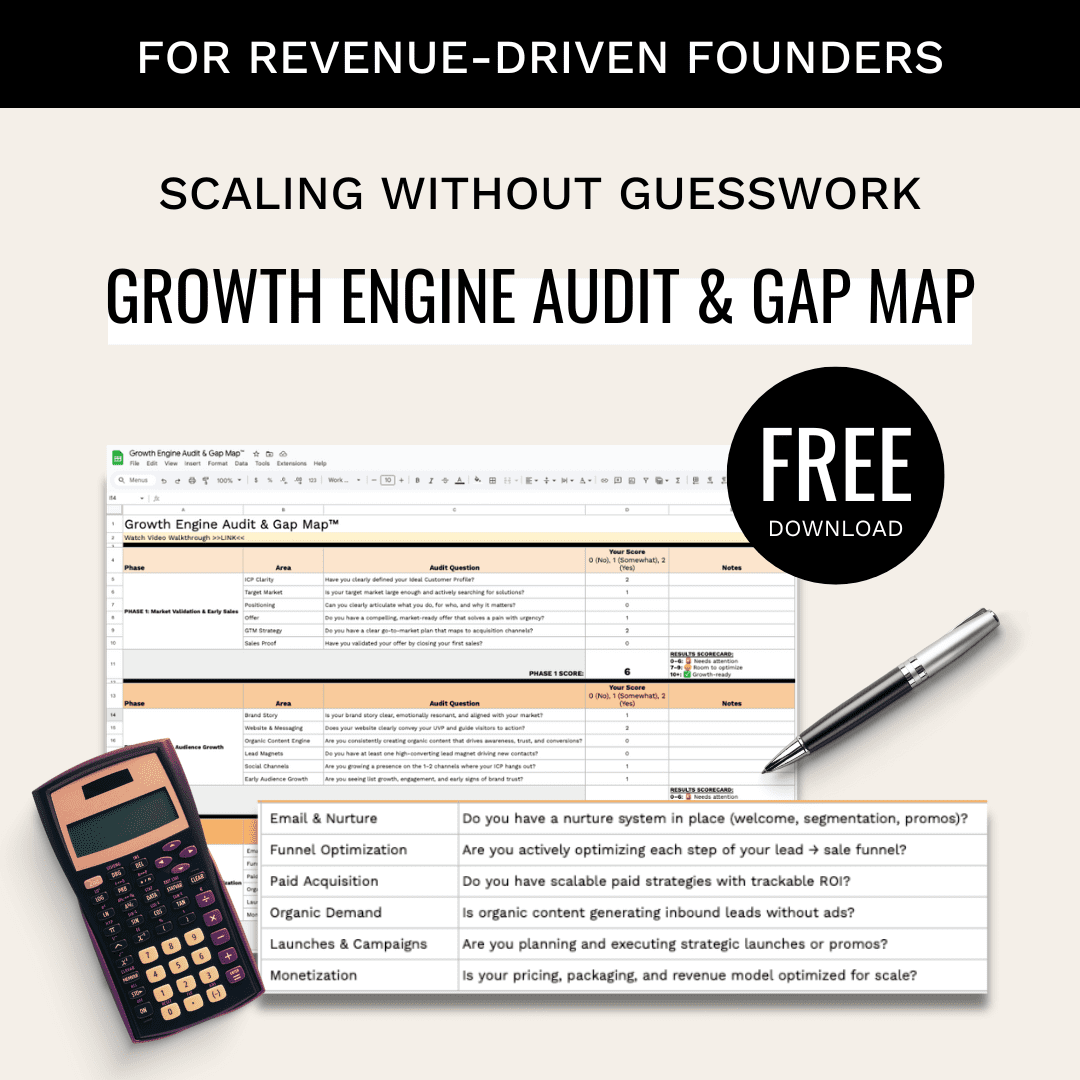

AI growth marketing systems are transforming how businesses approach revenue generation. Instead of juggling disconnected tools, these systems integrate data collection, analysis, decision-making, and automation into one streamlined process. Why they matter and how they work:
I’m Lillian Pierson, a fractional CMO and licensed Professional Engineer who builds these systems for a living. The one I built for SingleStore produced 1,100 marketing qualified leads at roughly $50 per lead over 10 months, with no paid ad spend (the SingleStore case study).
- Why It Matters: Traditional marketing methods are slow, manual, and hard to scale. AI systems eliminate inefficiencies, providing faster, data-driven decisions and consistent results.
- Core Benefits:
- Predictable growth through smarter forecasting.
- Scalability without increasing costs.
- Personalized AI growth marketing at massive scale.
- Quick reactions to market changes.
- How It Works: Four interconnected components drive these systems:
- Data Pipeline: Centralizes and cleans data from multiple sources.
- Decision Engine: Uses machine learning to predict customer behavior and recommend actions.
- Automation Layer: Executes AI-driven strategies like adjusting ads or sending personalized emails.
- Feedback Loop: Continuously learns and improves from results.
The hard part? Building and maintaining these systems. Start small, clean your data, and focus on measurable goals. With the right setup, you’ll spend less time on repetitive tasks and more time driving growth.
Components of AI Growth Marketing Systems
4 Core System Components
AI growth marketing systems are built on four key components, each playing a distinct role. While each part has its own function, their true potential lies in how they seamlessly work together as a unified system.
The data pipeline is the backbone of the system, collecting and consolidating information from various sources like your CRM, analytics tools, social media, email campaigns, and ad platforms. Unlike traditional setups where data is scattered across different tools, the pipeline organizes everything into a single, unified format. Beyond gathering data, it ensures quality by cleaning up duplicates and filling in gaps, which gives the AI reliable information to work with.
Next is the decision engine, which uses machine learning to analyze this unified data. It finds the patterns in your data, predicts what your customers do next, and tells you what to change. Operating in real time, the decision engine continuously processes incoming data and updates its recommendations, eliminating the need for periodic manual reviews.
The automation layer takes these recommendations and puts them into action. It connects directly to marketing platforms to adjust ad budgets, send targeted emails, update AI lead scores, and even tweak website content based on user behavior. By automating these tasks, this layer removes the need for constant manual intervention, ensuring AI-driven strategies are implemented consistently across all channels.
Finally, the feedback loop measures what those actions did for you and feeds the result back into the decision engine. It tracks metrics like conversion rates, customer acquisition costs, and revenue attribution, ensuring the system learns from every interaction. This continuous feedback allows the system to refine its strategies and improve over time.
How the Components Connect
The real power of an AI growth marketing system lies in how these components work together to create a cycle of continuous improvement. It all starts with the data pipeline capturing fresh information, like a visitor downloading a whitepaper or clicking on an ad.
That new data reaches the decision engine, which reads it against your historical patterns and your live campaign metrics. The engine might detect strong buying signals from a visitor’s behavior and recommend sending a follow-up email within the hour. It could also suggest increasing ad spend on the channel that brought in this high-value lead.
The automation layer steps in to execute these recommendations immediately. It sends the personalized email, adjusts the ad budget, updates the lead score in the CRM, and keeps monitoring the visitor’s actions to gather more insights.
Meanwhile the feedback loop is telling you whether any of it worked. Did the follow-up email boost engagement? Did the increased ad spend attract more quality leads? These results are sent back to the decision engine, which uses them to fine-tune its future predictions and strategies.
This interconnected process allows for real-time optimization. Every interaction gives it more to learn from, so it gets more accurate the longer you run it. Unlike traditional marketing methods that rely on weekly or monthly reviews, AI systems can complete this cycle thousands of times a day. This speed enables them to adapt quickly to market changes, seasonal trends, and evolving customer preferences.
Why AI Systems Beat Individual AI Tools
Problems with Using Too Many Tools
When teams rely on a mix of isolated AI tools, they often encounter more hurdles than they anticipate. For instance, using ChatGPT for content creation, another tool for email subject lines, a separate one for ad optimization, and yet another for lead scoring might sound like a solid plan. That is where it starts costing you.
Data silos are one of the biggest issues. Each tool only has access to a small portion of customer data, which means teams can’t get a full picture of the customer journey. On top of that, integration becomes a headache. Every new tool demands its own setup, API connections, and data exports. You lose hours to manual data transfers that should have gone to strategy.
Another common problem is conflicting insights. One tool might flag a prospect as highly engaged, while another suggests they’re not ready for outreach. Marketers are then forced to manually reconcile these differences instead of relying on streamlined, automated insights.
Costs also pile up fast. Each tool comes with its own subscription, and before long, teams find themselves paying for overlapping features without gaining a unified understanding of their audience. It drains your budget and caps what your team can actually get done.
Benefits of Connected AI Systems
Integrated AI systems solve these challenges by treating AI growth marketing as a cohesive process rather than a collection of disconnected tasks. Instead of tools working in isolation, these systems share data and insights across all functions, creating a seamless workflow.
One of the biggest advantages is unified customer intelligence. An integrated system provides a complete view of each customer by pulling together data from multiple touchpoints, like email history, ad interactions, website behavior, and purchase history. That whole view is what lets you decide what to say, when to say it and how.
Cross-channel optimization also becomes achievable. For example, the system might identify that prospects who engage with both social media ads and educational emails are far more likely to convert than those who only interact with one channel. Using this insight, it can automatically adjust budgets and messaging to maximize engagement across channels.
Connected systems also ensure customers receive coordinated, relevant experiences. When your prospect clicks a pricing email, the system follows up with messages that emphasize value or address potential objections, building on previous interactions rather than starting from scratch.
Predictive insights are another area where integrated systems excel. While standalone tools might predict basic metrics like email open rates, connected systems can forecast broader outcomes, such as customer lifetime value or revenue impact. This allows you to make decisions that align with long-term goals rather than focusing on short-term wins.
Operational efficiency is yet another win. Managing one integrated system is far simpler than juggling multiple tools. Automated data flows reduce the need for manual intervention, giving marketers more time to focus on strategy and creativity.
Side-by-Side: Isolated Tools vs. Integrated Systems
Compare what you have now against a connected system:
| Aspect | Isolated Tools | Integrated Systems |
|---|---|---|
| Data Access | Limited to single-channel data | Full view of all customer interactions |
| Decision Making | Narrow focus on specific metrics | Optimized for overall business outcomes |
| Personalization | Basic, single-channel segmentation | Dynamic, multi-channel personalization |
| Scalability | Manual coordination needed as complexity grows | Handles complexity and volume automatically |
| Cost Structure | Multiple subscriptions with overlap | One system with broad functionality |
| Implementation Time | Quick tool setup but complex integrations | Longer setup, but faster time to full impact |
| Predictive Power | Channel-specific predictions | Accurate, business-wide forecasting |
| Maintenance | Requires constant oversight of multiple tools | Centralized maintenance with automatic updates |
Another standout benefit of integrated systems is their ability to track cross-channel attribution accurately. Unlike individual tools, which often struggle to connect the dots between actions and conversions, an integrated system monitors the entire journey, from the first interaction to the final purchase. This level of tracking not only clarifies return on investment but also enables smarter, data-driven decisions.
I Built a Marketing Team with 1 AI Agent and No Code (free n8n template)
How to Build Your AI Growth Marketing System
Creating an AI growth marketing system involves a step-by-step process that turns your existing marketing efforts into a smart, automated powerhouse. How you can build a system that scales efficiently and drives predictable revenue.
Step 1: Set Your Goals and Metrics
Start by defining clear objectives that align with your business outcomes. Whether you’re focused on increasing monthly recurring revenue, lowering customer acquisition costs, or improving conversion rates, your goals should guide the entire system design.
Set specific, measurable targets for your AI to optimize. For instance, instead of saying “improve lead quality,” aim for something like “increase marketing qualified lead to sales qualified lead conversion rate from 15% to 25% within six months.” This level of detail helps the AI understand what success looks like.
Incorporate both leading and lagging performance metrics. Leading indicators, such as email engagement rates or website session depth, signal early trends. Lagging indicators like customer lifetime value and churn tell you how it played out. Together, they provide a comprehensive view for intelligent decision-making.
Before implementing AI, establish baseline measurements for all metrics. Document your current performance across channels, funnel stages, and acquisition costs. This baseline will help you measure the system’s impact and calculate ROI.
Finally, decide on appropriate attribution windows based on your sales cycle. For example, B2B companies with longer cycles might need 90- or 180-day attribution windows, while e-commerce businesses may focus on 7- or 30-day windows. These timeframes are crucial for making accurate predictions.
Step 2: Combine and Clean Your Data
Once your goals are clear, it’s time to prepare your data. A unified, clean dataset is the backbone of any AI system.
Start by conducting a data audit to identify all sources of customer information, CRM systems, email platforms, ad accounts, website analytics, support tickets, and billing systems. Many businesses discover their data is scattered across multiple tools.
Next, create a unified customer profile by linking identifiers like email addresses and phone numbers across platforms. This ensures your AI can track the entire customer journey, from clicking an email to converting on a sales call, as a single, cohesive path.
Take the time to clean your data by eliminating duplicates, standardizing formats, and filling in missing values. Accurate data leads to better AI performance.
Enable real-time data synchronization whenever possible. For example, if someone downloads a whitepaper, your system should trigger follow-up actions within minutes, not hours. Real-time capabilities make your system more responsive and effective.
Lastly, consider data privacy and compliance from the start. Ensure your processes align with regulations like GDPR or CCPA. Building consent management and retention policies into your system early will save headaches later.
Step 3: Add AI and Machine Learning
With clean and unified data, you can now integrate AI to generate actionable insights. Focus on applications that directly support your goals instead of trying to implement every possible feature.
Lead scoring models can deliver quick wins for B2B businesses. Train machine learning algorithms to analyze historical data and identify patterns that predict conversion likelihood. Factors like engagement frequency, content consumption, and behavioral signals can help prioritize leads for your sales team.
AI-driven customer segmentation goes beyond demographics. Machine learning can uncover behavioral patterns, grouping customers into segments like “high-engagement, slow-to-convert” or “price-sensitive, feature-focused,” which are hard to identify manually.
Leverage predictive analytics to forecast key metrics such as customer lifetime value, churn risk, or the best timing for upsell offers. That is the difference between you acting early and you reacting late.
Use AI for content and creative optimization by testing variations of subject lines, ad copy, and recommendations. The system learns from each interaction to improve future results.
Consider dynamic pricing and offer optimization, where AI adjusts discounts or recommendations in real-time based on customer behavior, market conditions, and competitors. This approach helps maximize both conversions and profit margins.
Step 4: Set Up Campaign Automation
Automate your campaigns to run seamlessly based on AI insights, reducing the need for constant manual intervention.
Design trigger-based workflows that respond to customer actions or AI predictions. For example, if a lead reaches a certain score, the system could automatically send a personalized email, notify sales, and adjust ad targeting to similar profiles.
Ensure cross-channel orchestration so customers have a consistent experience, no matter how they interact with your brand. For instance, if someone engages with your LinkedIn ad but doesn’t convert, your system might suppress display ads and instead increase email frequency with relevant content.
Enable dynamic content personalization to tailor messages in real-time. Instead of sending identical emails to a segment, adjust subject lines, recommendations, and calls to action based on individual preferences.
Use budget optimization automation to allocate ad spend efficiently. When it spots a keyword or audience working for you, it raises bids itself, capitalizing on opportunities without waiting for manual adjustments.
Automate A/B testing to speed up learning. The system can test variations, like email send times or landing page layouts, and promote winners based on statistical significance faster than manual processes.
Step 5: Track Performance and Improve
The final step is to continuously monitor and refine your system. AI thrives on feedback and regular updates.
Use real-time performance dashboards to track the metrics you defined earlier. These dashboards should highlight both campaign-specific results and overall business impact, with alerts for any significant changes.
Keep an eye on model performance since AI models can degrade as conditions evolve. Monitor accuracy, lead scoring effectiveness, and prediction reliability. Retrain on fresh data, or adjust the algorithm, whenever your numbers drift.
Implement feedback loops to improve predictions. For example, if a high-scoring lead doesn’t convert or a low-scoring one becomes valuable, feed this data back into the system to refine its accuracy.
Schedule regular optimization cycles, monthly or quarterly, to assess what’s working and where adjustments are needed. Analyze which predictions were most accurate, which campaigns performed best, and where manual input was still necessary.
As your system proves effective, start planning for scaling. Be ready to handle more data, complex journeys, and additional channels without overhauling your architecture.
Common Problems and How to Solve Them
Creating an effective AI growth marketing system isn’t without its challenges. Even with a solid plan, obstacles can arise, slowing progress or derailing results entirely. By recognizing these common hurdles early, you can tackle them head-on and build systems that deliver meaningful outcomes.
Typical Implementation Problems
One of the biggest challenges is data quality issues. AI systems rely heavily on the data they’re trained on, and many businesses find their customer data riddled with problems, duplicate records, inconsistent formats, or missing details. These flaws can undermine AI accuracy and effectiveness.
To address this, start with a detailed data audit. Instead of trying to fix everything at once, prioritize the data points most critical to your goals. For instance, if lead scoring is your focus, ensure contact details, engagement history, and conversion data are accurate before worrying about secondary attributes.
Another common issue is model drift. AI models that perform well initially can lose accuracy over time as markets evolve, customer behaviors shift, or business priorities change.
The solution? Regularly evaluate your models. Set up monthly checks with automated alerts and plan for periodic retraining cycles using updated data to keep your system aligned with current conditions.
Integration complexity is another stumbling block. Connecting your CRM, email platform, ad accounts, and analytics tools can be technically demanding, leading to data silos that limit AI’s potential.
Start small by integrating just a few systems, then expand gradually. Many businesses find integration platforms helpful as they simplify the technical work, allowing your team to focus on strategy rather than troubleshooting.
Beyond technical challenges, privacy and compliance concerns are critical. Automated systems processing customer data must adhere to regulations like GDPR and CCPA. Without careful design, it’s easy to unintentionally violate these rules.
Incorporate privacy protections into your system from day one. This includes clear consent management, data retention policies, and options for deleting customer information upon request. Document how your AI uses personal data, and ensure your team understands compliance requirements before launching campaigns.
Finally, unrealistic expectations often lead to frustration. Some teams expect AI to deliver instant, dramatic results or assume it will eliminate the need for human oversight. Both assumptions can cause projects to falter.
Set realistic timelines. Give it 60 to 90 days before you judge it, because that is how long it needs to gather enough of your data. Plan for gradual progress and keep human oversight in place, especially early on, to guide the system and make critical decisions.
Proven Methods for Success
To overcome these challenges, consider these practical strategies that integrate smoothly into your existing workflows.
- Start small and scale gradually. Rather than automating everything at once, focus on a single use case, like optimizing email subject lines or basic lead scoring. Perfect that process first to build confidence and understanding before expanding.
- Define clear success metrics. Choose measurable goals like email open rates, click-through rates, or conversion percentages. Avoid vague targets like "improved customer experience", which are harder to quantify and optimize.
- Educate your team. Help your marketing team understand how AI makes decisions, what data it uses, and how to interpret its recommendations. This knowledge equips them to work effectively with the system and spot potential issues early.
- Foster collaboration between marketing and sales. Sales teams often have insights into lead quality and customer preferences that aren’t captured in data. Regular feedback loops between these teams can refine your AI models and align them with real-world experiences.
- Document everything. Keep records of which data sources work best, effective model parameters, and how you solved technical challenges. This documentation will be invaluable for scaling your system or onboarding new team members.
- Assign clear ownership. Designate specific team members to monitor results, update models, and address issues. Without clear accountability, problems can go unnoticed until they escalate.
- Plan for ongoing maintenance. AI systems aren’t a “set it and forget it” solution. Budget time and resources for updates, retraining, and performance adjustments to keep your system running smoothly.
- Bring in external expertise if needed. For complex implementations, consultants or specialists can help you avoid common pitfalls and accelerate progress.
Finally, manage expectations. AI is excellent at processing data and identifying patterns, but it still requires human oversight for strategy, creativity, and nuanced decision-making. The best results come from combining AI’s efficiency with human insight.
Conclusion: Using AI Systems to Transform Marketing
Moving your marketing from traditional methods to AI-driven systems is reshaping how businesses achieve growth and increase revenue. Companies that embrace this shift are better equipped to thrive in a world that increasingly relies on data. A breakdown of the key ways AI systems can revolutionize your marketing efforts.
Key Takeaways
AI systems outperform standalone tools. Unlike individual tools, AI systems rely on interconnected components that share data and insights. This creates a feedback loop that continuously refines performance. With decent data and a phased rollout, you get capabilities that standalone tools cannot reach.
Data quality is everything. AI can only be as effective as the data it processes. Poor-quality data undermines even the most advanced systems. Businesses that prioritize cleaning, organizing, and maintaining their customer data see far better results. Budget for regular audits and upkeep, or this degrades on you.
Start small and expand strategically. The most effective AI implementations begin with a single, focused use case. Whether it’s lead qualification, email personalization, or campaign optimization, starting small allows teams to learn, adapt, and build confidence before scaling up. This approach minimizes risks and ensures resources are used wisely.
You cannot take your hands off it. While AI excels at analyzing data and spotting patterns, it can’t replace human judgment. Strategic decisions, creativity, and relationship management still require a human touch. The best systems combine AI’s analytical strengths with human intuition and creativity.
Ongoing maintenance is a must. AI systems are not “set it and forget it.” They need you watching them and updating them to stay useful. Factors like model drift, shifting market trends, and evolving customer behaviors mean that continuous adjustments are necessary to keep the system performing at its best.
Start Testing AI Systems Now
There’s no better time to start experimenting with AI growth marketing systems. As markets evolve rapidly, businesses that hesitate risk falling behind competitors already leveraging these tools.
Focus on your biggest pain points first. Identify areas where manual processes are time-consuming or where results are inconsistent. Whether it’s qualifying leads, optimizing campaigns, or personalizing emails, targeting these challenges makes it easier to measure success and demonstrate value to your team.
Use the tools you already have. Many businesses already use marketing platforms, CRMs, or analytics tools with built-in AI features. Start by exploring these existing capabilities before committing to new software or complex integrations.
Set realistic timelines. Allow for a 60-90 day learning phase to test and refine your approach. Initial results may be modest, but AI systems often deliver compounding benefits over time as they learn and adapt.
Document your progress. Keep track of what works, what doesn’t, and why. This documentation will be invaluable as you scale your system or onboard others into the process.
Your AI system doesn’t need to be perfect right away. It just needs to start learning. By applying these insights and building on the framework outlined here, your marketing strategy can evolve in step with the changing market landscape.
FAQs
How can businesses maintain high-quality data for effective AI growth marketing systems?
To ensure your AI-driven marketing systems perform at their best, you need to prioritize high-quality data. This means keeping data accurate, consistent, and timely. It’s crucial that information is free of errors, regularly updated, and synchronized across platforms to establish a reliable single source of truth.
Strong data governance is key to achieving this. Set clear standards and name who is accountable, or you lose control of your data quality. Regular audits and validation processes are practical ways to spot and correct issues, while AI-powered tools can take care of tasks like cleaning and refining data automatically. By focusing on these practices, businesses can create a dependable foundation for their AI marketing strategies.
What are the first steps a company should take to implement an AI growth marketing system?
To kick off an AI-driven growth marketing system, start by pinpointing your objectives, be clear about the specific results you’re aiming for with AI. After that, bring your data together by merging information from essential sources like your CRM, advertising platforms, and analytics tools into one centralized hub. With your data in place, use machine learning models to uncover patterns and forecast results. Finally, leverage automation tools to simplify execution, and monitor key performance indicators (KPIs) to evaluate your progress and fine-tune your strategy as needed.
How do AI growth marketing systems ensure privacy and comply with regulations like GDPR and CCPA?
AI-driven marketing systems are designed with privacy and regulatory compliance at their core, aligning with frameworks like GDPR and CCPA. By incorporating data minimization, secure storage, and privacy-by-design principles, these systems work to safeguard sensitive information effectively.
Many of these platforms come equipped with AI tools that streamline essential compliance tasks. They can take consent tracking off your plate, handle data access requests, and generate compliance reports. Moreover, practices like data anonymization and clear, transparent data handling reinforce user trust while ensuring businesses meet legal obligations.