
What is deep learning? Get the scoop here fast…
Most of the people who work in analytics have some experience with random forests, clustering, association analysis, regression, and decision tree techniques. However, many have not begun exploring deep learning techniques. Things change so fast in the data science space. It’s no wonder lots of professionals are still scratching their heads and asking, “What is deep learning?”
What exactly is Deep Learning?
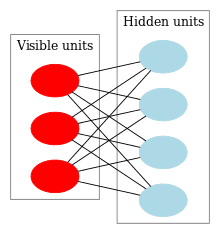
Deep learning is the new hot thing in machine learning research. It is a set of generative machine learning techniques that convert raw data into high-level representations. These then can be used to perform standard machine learning tasks, such as classification and clustering. It is a breakthrough in machine learning and the quest for artificial intelligence. That’s because deep learning relies on a hierarchy of layers in a neural network. Each layer learns on a different level, and there are distinct layers for higher and lower abstraction.
[supsystic-slider id=2 position=”center”]
Deep learning made its name in 2012 when machine learning gurus used it to win a Kaggle competition. Recent success in such competitions suggests that deep learning is the most accurate machine learning method currently in use. Unlike traditional machine learning, deep learning automatically creates representations and identifies features. It creates a new synergy between supervised and unsupervised learning.
This innovative method is similar to traditional neural networks, except its improved deep-layer training allows for more layers of artificial neurons than are traditionally used.
Google, Microsoft, and Facebook are all over it, of course. Google uses deep learning for improved image search within Google+. Microsoft is using it for improved accuracy in speech recognition. Deep learning is also used for image classification, document tagging, speech-to-text functions, and object detection in unlabeled images. Large companies such as Google use mega-scale distributed processing across clusters of graphics processing units (GPUs). But if you don’t have access to a server farm, you can use certain Python libraries to run your code across the GPU on your personal machine.
If you are already working in analytics or business intelligence, you may be using neural networks. The good news is that deep learning is not much more complicated than neural networks. The bad news is that it is a fair bit more difficult to move from a traditional career in IT to a career that uses deep learning methods.
Maybe you’re not even using machine learning, neural networks, or deep learning. The good news is that you can still learn. And, you’re already making progress today, by taking the time to learn the answer to the question, “What is deep learning?”
Most deep learning work is being done in Python. If you have no Python experience, you can learn for free using LearnPython’s interactive Python tutorials (basic and advanced).
If you are just looking to use Python’s deep learning libraries, you won’t need advanced knowledge of calculus, linear algebra, statistics, or computer science. However, if you want to conduct your own research using deep learning, you will want to brush up on those subjects before you begin. Once you get up to speed, you can begin using Python’s deep learning libraries with pylearn2, theano-nets, hyperopt, or the Theano package.
This may all seem pretty simple and straightforward, but, of course, it isn’t. People are catching on to the fact that machine learning and deep learning are highly sought skills on the employment market. Recruiters are becoming more and more discerning. Knowing how to use Python for machine learning and deep learning is a great start, but much more is required to be a true master.
As with any other specialization in data science, there is a vast difference between being a technician and being a scientist. The technician may know how to use a program. Data scientists can truly think through all the deep and intricate details that must be considered when using tools and data to solve complex problems. As is usually the case, understanding the why is far more important than knowing the how. So, what is deep learning? Well, deep learning is just another tool… And remember, no tool can make up for a deficiency in a user’s analytical abilities.
P.S. Even if you’re not at the deep learning level yet, it’s always worth improving your skills in data analytics and data science. The following books are a good place to start: Data Science for Business: What you need to know about data mining and data-analytic thinking or Data Smart: Using Data Science to Transform Information into Insight.