One Question to a Cisco Rep Landed Them Bank of China: Extranet’s Growth Story
How Extranet Systems landed Bank of China: the reverse partner ask, a two-way race team sponsorship, and the infrastructure buy that protects its pricing.



How Extranet Systems landed Bank of China: the reverse partner ask, a two-way race team sponsorship, and the infrastructure buy that protects its pricing.

I outline an 8-step, math-first process to turn ARR goals into qualified pipeline, owners, and clear stop rules.

I map revenue to qualified accounts using segment-level cycle data and buyer engagement to forecast 2-3 quarters ahead.

I break down year-one costs, timelines, and budget steps to build an AI-native growth system for startups.

I explain how a shared AI context layer aligns positioning, content, and lead flow to grow B2B pipelines.
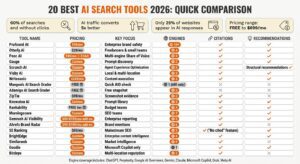
Track where your brand appears in ChatGPT, Perplexity, and Google AI Overviews. 20 tools compared by citation tracking, share-of-voice measurement, competitor benchmarking, and price, including 3 free options.

I break down 5 organic SaaS webinar tactics I used to drive 1,100 B2B leads in 10 months, cut CPL to $50, and turn webinar content into a repeatable lead system.

Rob LoCascio took LivePerson public and grew it to $4.5B. Here’s the five-step sequence he uses to build companies before their markets are ready.

How George Hartley took Nitrosend to 1,200 signups and 750,000 weekly sends with a lean product launch sequence run by three people and Claude.


I explain how to turn public web data into CRM-ready prospect lists, ICP research, and competitive signals.

I explain five evidence areas – evals, observability, governance, deployment, and a trust pack – to shorten enterprise AI review cycles.

I break down AI spreadsheet choices that keep MRR, CAC, funnel math, and runway tied to live data for faster GTM decisions.

Sort AI GTM actions by risk; require human approval for customer-facing, pricing, or sensitive-data tasks and run weekly checks.

Align ICP to workflow outcomes, pick an ACV-based sales motion, and run tiered ABM combining AI agents and humans.

Treat AI spend as separate buckets – optimize inference, serverless, and orchestration to stop margin leaks.

How lean AI founders ship, measure, and connect product to revenue with one tool per job, clear metrics, and staged budgets.

Compare Coreworks, Sourcetable, and Docsumo to pinpoint funnel leaks, clean intake data, and turn pipeline signals into actionable revenue decisions.

Compare code-first, no-code, and AI support tools to fix activation gaps and speed time-to-value in PLG products.

Compare prebuilt, plain-language, orchestration, and custom AI workflow models to pick the right fit for lean teams.

Compare five AI agent platforms for GTM teams, weighing no-code speed versus governance, deployment, and workflow reach.

Compare 10 vetted fractional CMO companies for tech and SaaS; Look at strengths, pricing, engagement models and best-fit use cases to find the right marketing leader.