


Launching a startup without a big sales team? Outsourcing lead generation might just be your best move. Building an in-house team takes time and money – resources most startups can’t spare. The good news? Lead generation services can deliver qualified leads in as little as 30 days while keeping your sales team focused on closing deals.
Here’s why it matters:
- Sales reps spend only 30% of their time selling; the rest goes to admin and prospecting.
- Startups often face a "feast or famine" sales cycle – outsourcing fixes this by maintaining a steady pipeline.
- In-house sales development costs often match or exceed outsourcing fees.
What to look for in a provider:
- Experience with startups and industries like SaaS or tech.
- Flexible contracts (e.g., month-to-month or short pilots).
- Custom, data-driven approaches – not cookie-cutter methods.
- High-quality leads vetted with frameworks like BANT.
Top providers for startups:
- Data-Mania: Ideal for startups with $1M+ marketing budgets, focusing on scalable systems.
- Belkins: Quick multichannel campaigns with a strong ROI.
- Martal Group: Skilled in complex sales cycles, especially for tech buyers.
- CIENCE: Combines SDR teams with AI-driven tools for large-scale prospecting.
- SalesRoads: US-based phone-first outreach with experienced reps.
- LeadGenius: Custom data sourcing for niche markets.
- Callbox: Multichannel outreach across email, phone, and events.
- Leadium: Research-first outbound prospecting for targeted growth.
- Operatix: Specialized for SaaS and B2B tech companies.
Quick Comparison:
| Provider | Best For | Pricing Range | Key Features |
|---|---|---|---|
| Data-Mania | Tech startups with $1M+ budgets | Custom | Scalable systems, knowledge transfer |
| Belkins | Fast, multichannel campaigns | $5,000–$14,800/month | Email, LinkedIn, phone outreach |
| Martal Group | Complex tech sales cycles | $4,500–$6,195/month | Full-cycle support, senior sales executives |
| CIENCE | Large-scale prospecting | $3,000–$15,000/month | AI + human SDR teams, proprietary platform |
| SalesRoads | Phone-first outreach | $5,500–$9,500/4 weeks | US-based reps, consultative conversations |
| LeadGenius | Niche markets, custom data | Custom | Verified data, account-level insights |
| Callbox | Multichannel outreach | $4,500–$5,300/month | ABM strategy, global markets |
| Leadium | Outbound prospecting | Retainer-based | Research-first, tailored outreach |
| Operatix | SaaS and B2B tech companies | Custom | Vertical-specific expertise |
Takeaway:
Outsourcing lead generation saves time, reduces costs, and keeps your pipeline full. Focus on providers that deliver quality over quantity, offer flexible contracts, and work seamlessly with your CRM. Whether you’re Series A or pre-launch, the right partner can help you scale faster without burning through your budget.
The BEST B2B Lead Generation Strategy in 2025
sbb-itb-e8c8399
What to Look for in a B2B Lead Generation Service
Not every lead generation service is designed with startups in mind. The right partner understands the challenges you face – tight budgets, small teams, and the need to see results quickly – while delivering leads that actually convert. Here’s what you should focus on when evaluating potential providers.
Fit for Startups and Ability to Scale
Startups require lead generation providers who understand their unique needs. Look for companies with experience working with early-stage businesses in your industry. Providers specializing in SaaS or B2B tech are often better equipped to engage technical buyers with messaging that resonates.
Top providers can launch campaigns in about two weeks, compared to the usual six to eight weeks [2]. This faster turnaround can help you generate qualified meetings sooner, which is critical for gaining investor interest.
Flexible contracts, like month-to-month agreements or 90-day pilot programs, let you test the waters without a long-term commitment [2] [5]. As your business grows, the ideal provider should scale alongside you – whether that means targeting new markets, increasing lead volume, or refining your ideal customer profile.
Flexibility and Custom Approach
Avoid providers that rely on cookie-cutter methods or mass outreach. The best partners build custom datasets tailored to your ideal customer profile (ICP) instead of relying on generic databases [3]. They also use real-time intent signals – like recent funding announcements, executive hires, or tech stack changes – to time their outreach when prospects are most likely to engage [2] [9].
Using a multi-channel approach, such as A/B testing across email, LinkedIn, and phone, can increase performance by over 200% [6]. Check if the provider integrates content, ads, and outbound prospecting into a single strategy, rather than treating them as separate efforts.
"Always try to build an in-house knowledge center for whatever you’re trying to outsource. Then use the external specialists to boost and reinforce your in-house team."
- Michael Maximoff, CEO, Belkins [6]
Lead Quality and Vetting Process
High-quality leads are non-negotiable. Top-tier providers use frameworks like BANT (Budget, Authority, Need, Timeline) to ensure prospects are ready for sales before passing them along [2] [4]. They also conduct in-depth research on your Total Addressable Market (TAM) to focus on the most relevant segments [7].
Data accuracy is critical. Look for providers that rely on human-verified data and multi-layered enrichment processes to deliver verified emails and direct phone numbers [2] [3]. Some providers achieve data validity rates as high as 98% [10], saving your team from chasing outdated or incorrect contacts.
Transparency matters. Your provider should integrate with your CRM, giving you real-time visibility into your pipeline and lead attribution [2] [11]. It’s worth noting that only 27% of companies report being satisfied with their lead generation provider’s performance, which highlights the importance of understanding how leads are sourced and qualified [4].
Planning and Execution Combined
Lead generation success requires more than just execution – it calls for a strategic foundation. The best providers help you define your ICP, craft messaging that tackles real pain points, and select the right channels before launching campaigns [3].
A hybrid approach that combines AI-driven automation with human expertise often delivers the best outcomes. While AI provides scalability, human involvement ensures the precision needed for complex sales scenarios [2] [3]. For technical products, you may need senior sales professionals who can have meaningful conversations with CTOs or VPs of Engineering, rather than junior reps relying on scripts [2].
Finally, confirm that the provider offers full go-to-market integration. Some agencies handle everything from content creation to paid ads and outbound prospecting, ensuring all touchpoints align and reinforce your message [2].
10 B2B Lead Generation Services for Startups Without Large Sales Teams
Here’s a rundown of ten lead generation providers tailored for startups that need to build a strong sales pipeline without hiring an entire SDR team. Each provider offers a unique approach to outbound prospecting, appointment setting, and sales development.
Data-Mania
Best for: Startups seeking a data-driven lead generation strategy with a focus on long-term sustainability.
Data-Mania helps startups lay the groundwork for their go-to-market strategy by creating scalable lead systems. Their process includes strategic planning, technical setup, and transferring knowledge to your team, ensuring you can manage your pipeline independently in the future.
This service is ideal for tech-focused startups, as it pairs you with a marketing leader experienced in data and AI consulting. Lillian Pierson, Data-Mania’s founder, brings expertise in growth planning and marketing leadership, emphasizing sustainable systems over quick fixes.
Data-Mania works best for startups with marketing budgets exceeding $1 million annually, especially those looking to strengthen their internal marketing capabilities while generating leads.
Belkins
Best for: Startups that want a fast, multichannel outbound solution.
Belkins specializes in appointment setting through email, LinkedIn, and phone. Their technical expertise in email deliverability ensures campaigns launch quickly – often within 14 days. For instance, one campaign achieved a 41% open rate and 78 booked appointments [2][16].
With a 4.9/5 rating on Clutch (230 reviews) and 4.8/5 on G2, Belkins is a trusted partner for startups. Clients report a 3.6x ROI, thanks to their proactive approach to appointment setting [15][16]. Pricing ranges from $5,000 to $14,800 per month, depending on the scope [15].
Martal Group
Best for: B2B tech and SaaS startups needing experienced outbound sales support.
Martal Group focuses on complex sales cycles, deploying senior sales executives skilled in engaging technical decision-makers like CTOs and VPs of Engineering. This expertise is critical when selling to sophisticated buyers.
Unlike many providers, Martal Group offers full-cycle support, including deal advancement and contract negotiation. Over 90% of reviews highlight their seamless integration with internal teams [16]. They hold a 4.8/5 rating on Clutch (106 reviews) and a 4.6/5 rating on G2 [15][16].
Pricing is tiered: $4,500/month for early-stage startups, $5,000/month for Series A, and $6,195/month for Series B-C [16].
CIENCE
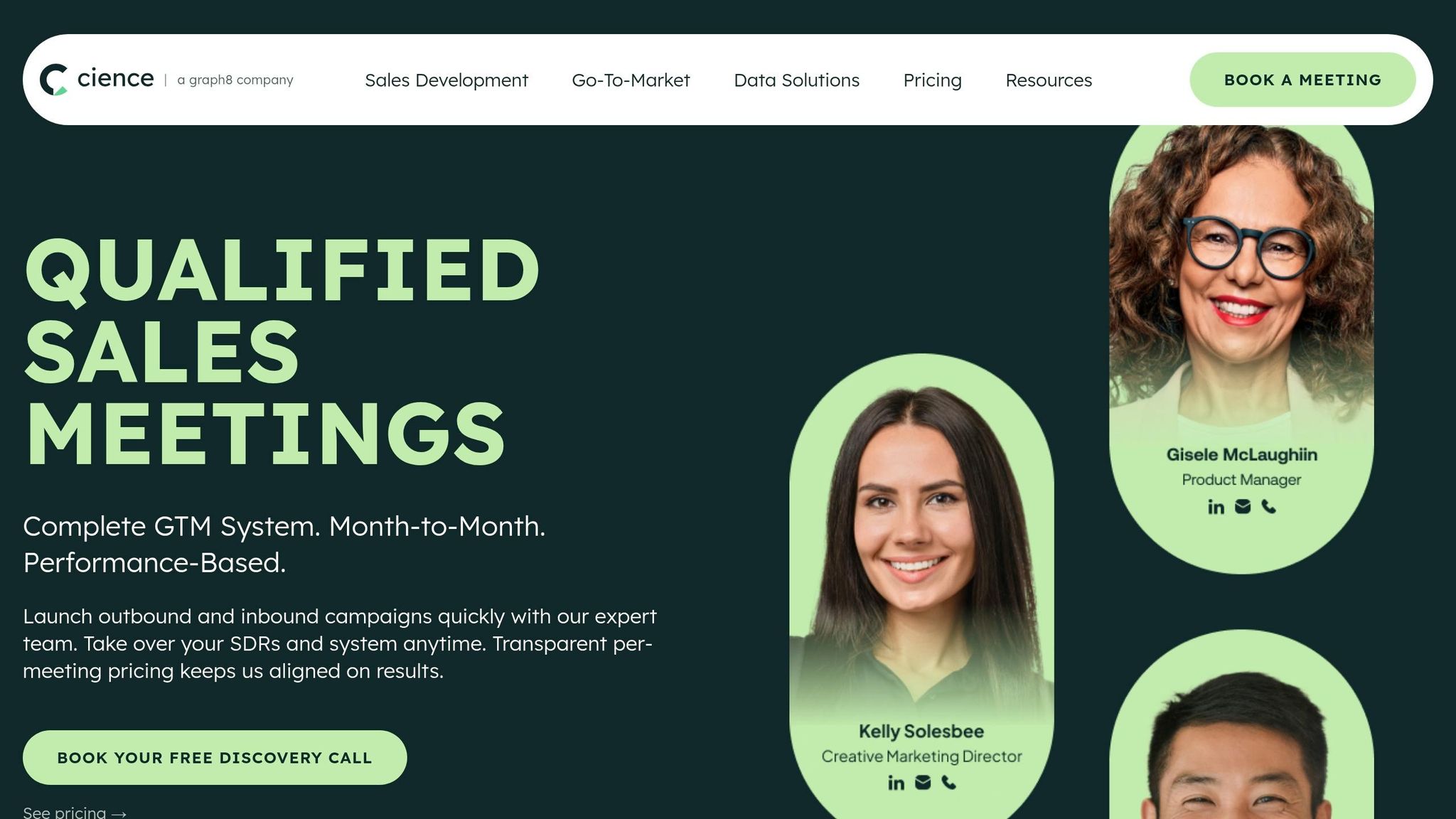
Best for: Startups needing large-scale prospecting and sales development.
CIENCE combines "SDR-as-a-service" with its proprietary data platform, CIENCE GO. This hybrid model supports both managed services and software licenses, enabling startups to scale outreach as needed.
They use AI-assisted prospecting alongside human SDR teams to manage top-of-funnel activities [13][17]. Pricing ranges from $3,000 to $15,000 per month [17]. While CIENCE maintains a 4.8/5 rating on First Page Sage, its G2 rating is lower at 3.8/5, with some users noting high SDR turnover as a concern [13][15].
SalesRoads
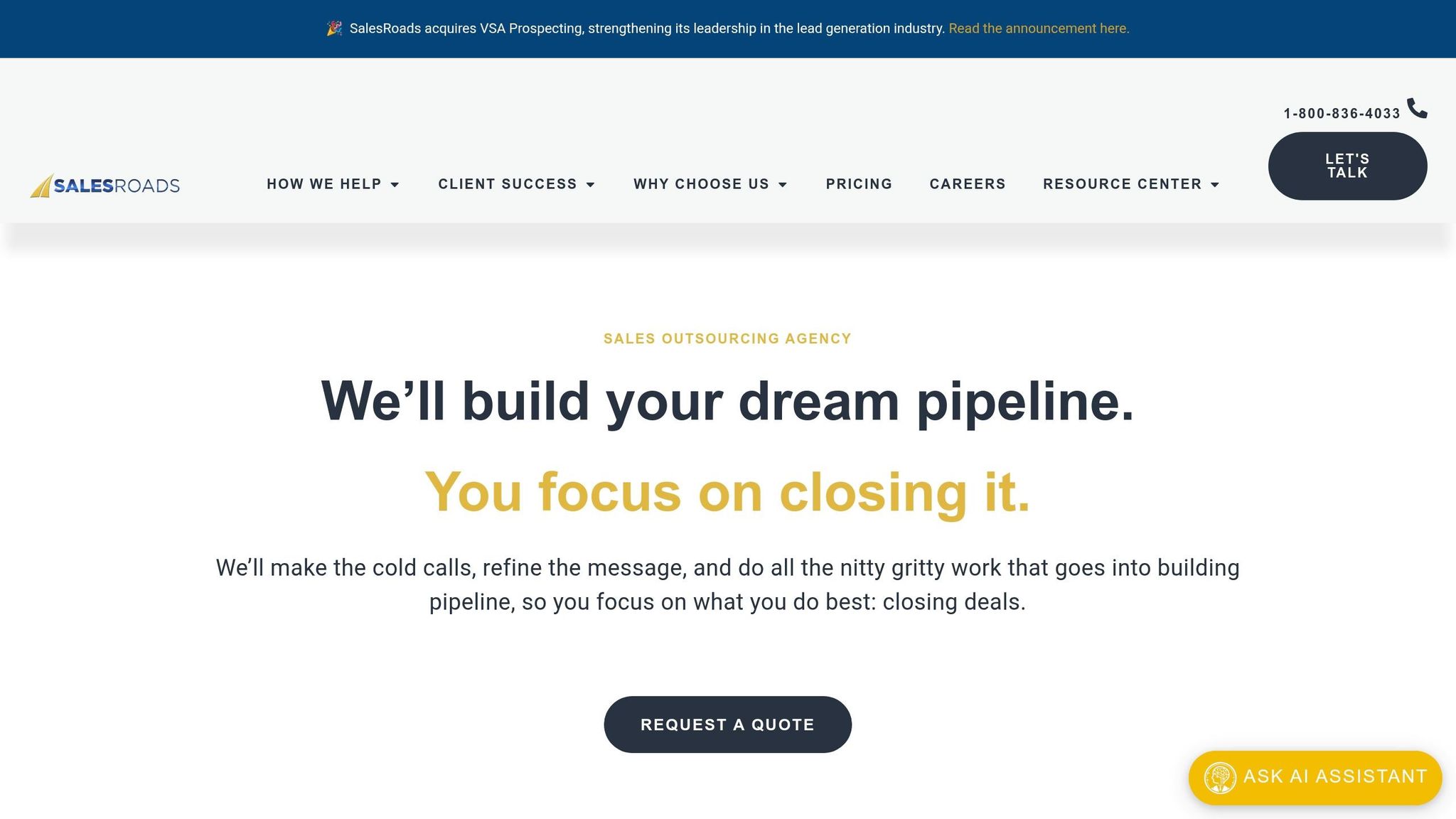
Best for: Startups prioritizing consultative, phone-first outreach.
SalesRoads stands out with a 100% US-based SDR team and a 28-day satisfaction guarantee. Their telesales professionals have an average of 14 years of experience, making them particularly skilled at handling complex sales conversations [14].
Specializing in regulated industries like finance and healthcare, SalesRoads focuses on nuanced, human-led outreach. They hold a perfect 5.0/5 rating on Clutch, based on 65 reviews [16]. Pricing operates on a retainer model, ranging from $5,500 to $9,500 per 4-week period [15].
LeadGenius
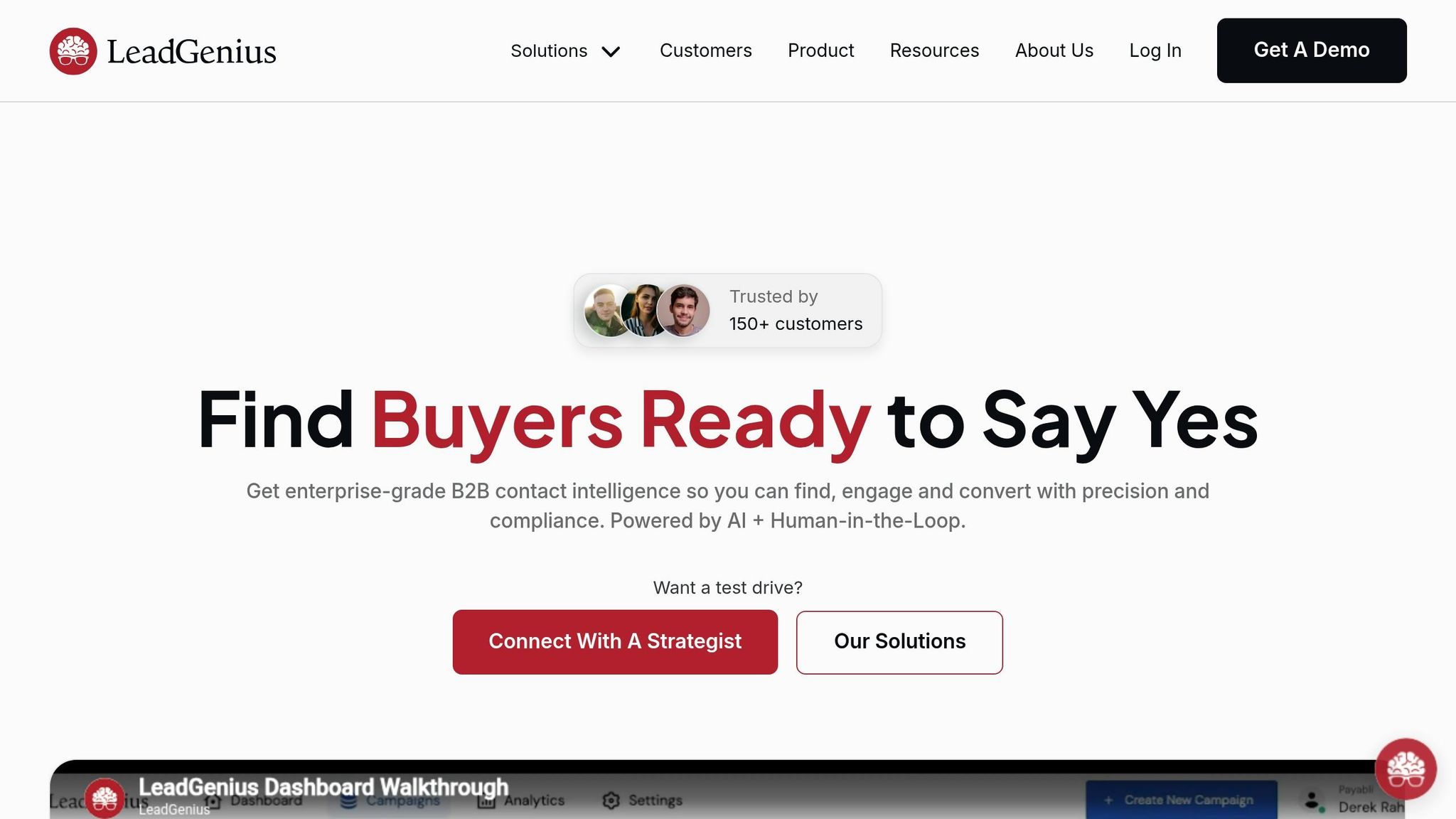
Best for: Startups targeting niche markets with custom data needs.
LeadGenius uses a combination of AI and human research to source hard-to-find contact data. Their focus on data enrichment and account-level intelligence ensures high accuracy, which is essential for startups pursuing specific customer profiles [12][1].
This service is particularly valuable for startups seeking verified data for emerging roles or new markets.
Callbox
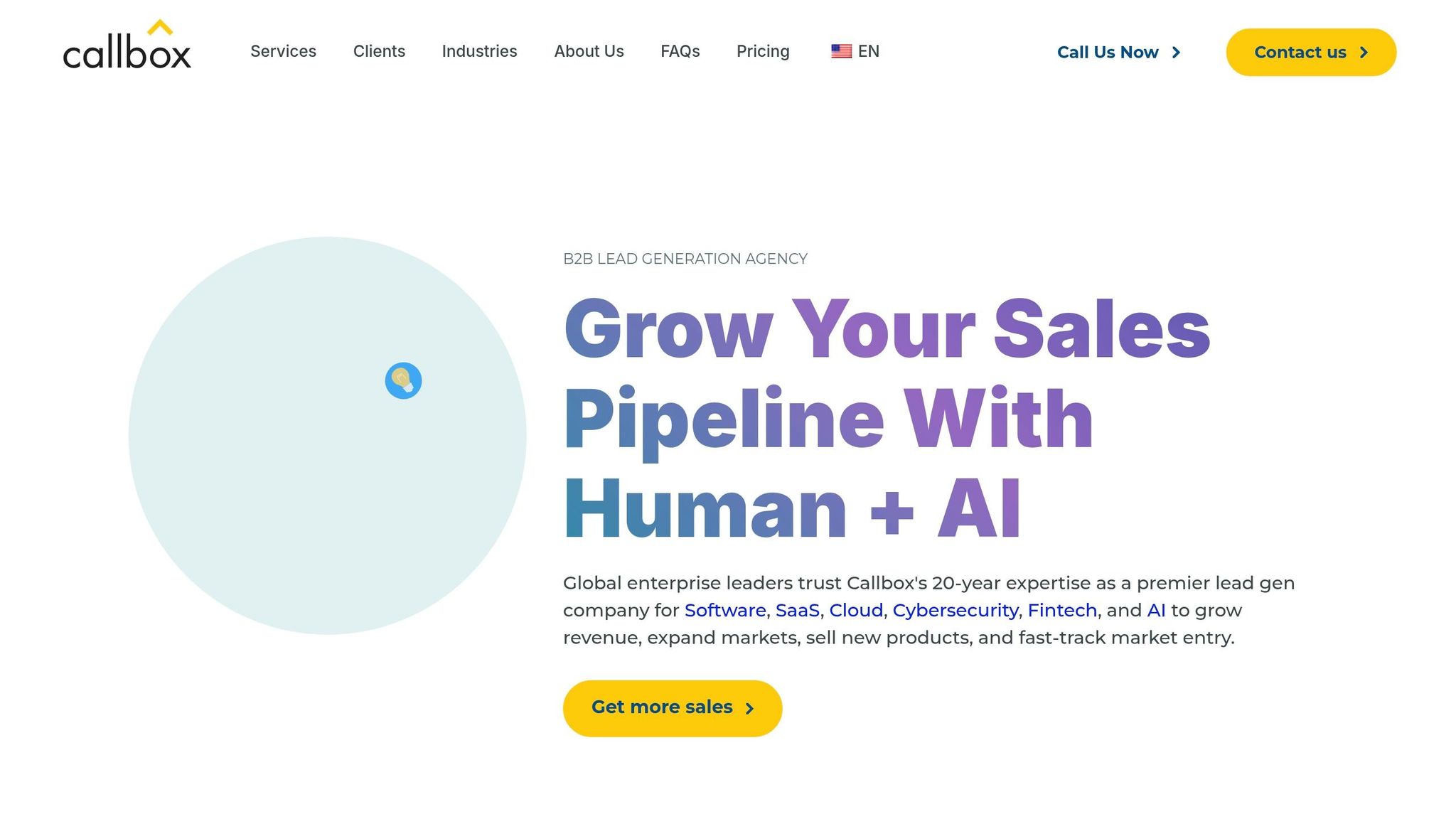
Best for: Startups looking for multichannel outreach across email, phone, and events.
Callbox brings 20+ years of experience and uses a multi-touch ABM strategy across email, phone, and social channels. They are especially strong in global markets like APAC and EMEA, managing campaigns through their proprietary CRM, Callbox Pipeline [15].
Their six-channel approach allows startups to test multiple outreach methods simultaneously. Monthly costs range between $4,500 and $5,300 [15].
Leadium
Best for: B2B teams needing outsourced SDRs without hiring in-house.
Leadium’s research-first approach maps target accounts and stakeholders before launching personalized outreach sequences. Their focus on tailored outreach has earned them a perfect 5.0/5 rating on Clutch [16].
Clients have reported a 150% increase in booked meetings within the first quarter and a 30% faster closing rate [16]. Their "People-as-a-Service" model is ideal for startups looking to scale without the burden of managing an internal team [13][16][17].
Operatix
Best for: SaaS and B2B tech companies seeking industry-specific expertise.
Operatix organizes its SDR teams into specialized "business pods" focused on verticals like Cybersecurity, Martech, and Fintech [15]. This approach ensures a deep understanding of industry nuances, buyer personas, and competitive landscapes, leading to more effective outreach.
Their vertical expertise makes them a strong partner for startups in growth markets, offering tailored strategies for pipeline generation.
Provider Comparison Table
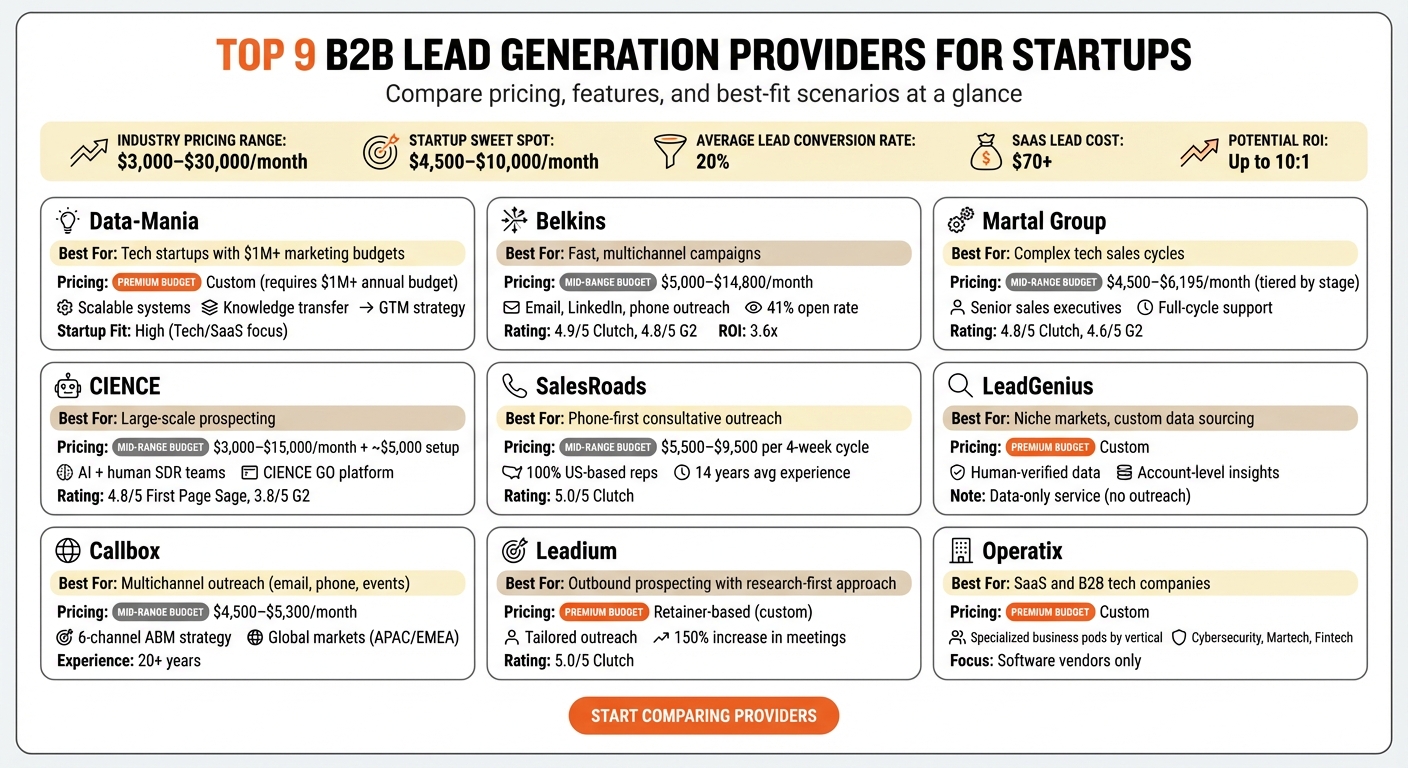
B2B Lead Generation Service Providers Comparison for Startups 2026
The table below highlights key features and pricing for various lead generation providers, making it easier to identify which one fits your startup’s specific needs.
| Provider | Fit for Startups | Main Services | Pricing Approach | Limitations |
|---|---|---|---|---|
| Data-Mania | High (Tech/SaaS focus) | GTM strategy, system engineering, lead generation setup, and knowledge transfer | Custom (requires $1M+ annual marketing budget) | Higher investment threshold; ideal for startups aiming to build lasting systems |
| Belkins | High (International focus) | Appointment setting, lead research, email deliverability, multichannel prospecting | Monthly retainer ($5,000–$14,800) | Limited to email and LinkedIn channels; lacks integrated advertising |
| Martal Group | High (Tech/SaaS focus) | Outsourced sales executives, inbound/outbound sales, full-cycle support | Custom retainer (3-month pilot required) | Exclusively serves tech/SaaS sectors; relies on traditional outbound methods |
| CIENCE | Moderate (High volume) | Outsourced SDR teams, lead qualification, CIENCE GO platform | Setup fee ~$5,000 plus monthly fee | High SDR turnover; dual platform model may feel complex |
| SalesRoads | High (U.S.-market focus) | 100% U.S.-based SDRs, appointment setting, consultative outreach | Per 4-week cycle (~$9,950) | Phone-centric model; higher costs; less effective for technical audiences |
| LeadGenius | Moderate (Data focus) | Account research, human-verified B2B data, custom data sourcing | Custom pricing | Data-only service; does not handle outreach |
| Callbox | High (Multi-channel) | Telemarketing, email, social, and chat outreach | Monthly retainer ($4,500–$5,300) | Heavy reliance on phone outreach; CRM integration may cause friction |
| Leadium | Moderate (SaaS scale) | Outbound prospecting, list building, research-first approach | Retainer-based | Research-intensive process limits volume; requires a well-defined ICP |
| Operatix | High (Software focus) | Specialized sales pods for tech verticals and industry expertise | Custom (no set pricing) | Exclusively supports B2B software vendors |
| Revnew | Moderate | Outbound prospecting, meeting generation, revenue scaling support | Custom pricing | Limited pricing transparency |
Key Insights on Pricing and Performance
In 2026, the cost of B2B lead generation services typically ranges from $3,000 to over $30,000 per month, with most startup-focused providers charging between $4,500 and $10,000 [2]. Flat-fee retainers are a popular choice because they ensure predictable budgeting, avoiding the unpredictability of percentage-of-spend models [8]. Month-to-month contracts are another advantage, offering flexibility to pivot based on performance without tying up valuable resources [8].
Since only 20% of leads convert [8], prioritizing lead quality over sheer volume is critical for startups with limited sales resources. Look for providers that focus on delivering Sales Qualified Leads (SQLs) and driving meaningful metrics like net new annual recurring revenue, rather than vanity stats like click-through rates.
How to Select the Right Provider for Your Startup
Choosing the right provider means aligning their services with your startup’s stage and budget. For pre-Series A startups, month-to-month contracts are a smart move. They protect your runway and give you the flexibility to pivot quickly if needed. Early-stage SaaS startups, for instance, often deal with lead costs exceeding $70 and conversion rates around 7.52%. Locking into long-term contracts with underperforming providers can drain your capital fast [8]. Once you’ve found a provider that fits your stage and budget, focus on ensuring predictable pricing.
Flat-fee pricing is often a better choice than percentage-of-spend models. Aaron Rovner of SaaSHero explains, "Percentage-of-spend pricing creates incentives to inflate budgets" [8]. A flat monthly retainer keeps costs steady and aligns the provider’s goals with delivering high-quality leads [8].
Account management is another critical factor. Make sure to clarify who will be managing your account. Around 80% of lead generation agencies fall short of startup expectations due to handing accounts to junior staff or relying on vanity metrics [8]. To avoid this, ask about account manager-to-client ratios – a good standard is one manager for every 8–10 clients. Also, request examples of personalized outreach to ensure the provider uses human-researched personalization instead of relying entirely on AI-generated templates.
Domain expertise is key. Look for providers with experience in your industry – whether that’s SaaS, Fintech, or HealthTech – and ensure they integrate smoothly with your CRM, such as HubSpot, Salesforce, or Pipedrive. It’s also crucial that you retain full ownership of all generated lead data [8][18].
Finally, evaluate providers based on metrics that matter – revenue impact, not vanity stats. With conversion rates around 20%, focus on metrics like Sales Qualified Leads (SQLs) and Net New ARR. Ask for case studies from companies at a similar stage and consider starting with a 90-day pilot before committing to a long-term partnership [2].
Conclusion
For startups with smaller sales teams, picking the right lead generation service is a make-or-break decision. The ideal provider should match your startup’s stage and operational needs, offering not just strategic advice but also actionable execution – because a simple list of names won’t cut it.
Here’s a sobering fact: around 80% of lead generation agencies fail startups. Why? They often assign accounts to inexperienced staff or chase vanity metrics instead of driving real revenue [8]. With early-stage SaaS startups facing lead costs above $70 and conversion rates hovering around 7.52%, you can’t afford to work with a provider that treats your account like just another number [8]. This makes flexible contracts and transparent performance metrics essential.
Since only 20% of leads convert, focus on quality over quantity [8]. Opt for flat-fee pricing to protect your budget and ensure your provider’s goals align with delivering qualified meetings – not just burning through your runway.
Pay attention to account management. A good rule of thumb is one account manager per 8–10 clients. Insist on retaining full ownership of your lead data, and ask for case studies from companies in a similar stage as yours. Your provider should seamlessly integrate with your CRM and prioritize metrics that matter: Sales Qualified Leads and Net New ARR, not vanity stats like open rates or impressions [8].
Combining AI tools with human expertise offers the efficiency you need while still building the relationships crucial for complex B2B sales. Take the time to evaluate your options carefully. The right partner can deliver up to a 10:1 ROI and turn your pipeline into a steady engine for growth [7].
FAQs
What results should I expect in the first 30–90 days?
In the first 30 to 90 days, you’ll likely see a boost in both the number and quality of leads. Common outcomes include booked meetings, qualified leads, and the beginnings of pipeline growth. However, the results can differ depending on how well the provider’s strategy matches your startup’s specific objectives.
How do I tell if leads are truly qualified (not just a list)?
To make sure your leads are more than just a random list of contacts, take a closer look at how the provider qualifies them. Genuine leads should align with your ideal customer profile (ICP), include verified contact information, and demonstrate real interest or intent to make a purchase. The best providers go beyond basic data collection – they validate information, perform focused research, and monitor engagement signals to ensure the leads are actually ready for sales. Simply handing over unverified names or emails doesn’t cut it.
What should I ask to avoid wasting budget on a bad provider?
When evaluating potential providers, it’s crucial to ask pointed questions about their approach, execution, and results. For instance, “How do you ensure lead quality?” or “Can you provide case studies or ROI metrics from startups like mine?” These questions reveal how well they prioritize transparency and measurable outcomes.
Additionally, dig into how they adapt their methods to your specific needs by asking, “How do you customize outreach for my target market?” Providers who can clearly explain their strategies and offer tailored solutions are more likely to deliver meaningful results.