
ARE AI-NATIVE STARTUPS LEAVING YOURS BEHIND? TAKE THIS 5-MINUTE ASSESSMENT TO FIND OUT →
AI-Native GTM Strategy: The Complete Guide

AI-Native GTM Strategy: The Complete Guide

Design and scale an AI-native GTM strategy: align data, automate sales and marketing, run signal-based outbound, and measure AI-driven KPIs.

Your buyers are doing their homework long before they ever talk to your sales team. They’re reading, comparing, and shortlisting on their own, often with AI tools running the first pass. If your go-to-market motion still assumes a rep controls that first conversation, you’re already a step behind.

An AI-native GTM strategy is my answer to that shift. It means designing your entire go-to-market motion around real-time signals, automation, and the way modern buyers actually decide, rather than bolting a few AI tools onto an old playbook. I’ve spent the last few years building these systems for AI, data, and B2B SaaS startups, and this guide walks through how I do it.

Three areas do most of the heavy lifting:

  • Sales enablement: AI handles CRM updates, call analysis, and first-draft proposals, so your reps spend their time closing.
  • Marketing tech: predictive targeting replaces static personas and surfaces the accounts ready to buy now.
  • Outbound prospecting: instead of spraying cold emails, you reach high-intent prospects the moment their behavior signals interest.

What most teams get wrong about AI-native GTM

Here’s the mistake I see over and over. Teams treat AI-native GTM as a tooling decision. They buy the AI SDR, the enrichment platform, and the content generator, then wonder why nothing compounds.

AI-native GTM is a systems decision, not a shopping list. The tools only pay off once the system underneath them is sound. That means your positioning is sharp enough for AI to target against, your data is clean enough to trust, and your team knows which signals actually predict revenue. Skip that groundwork and all you’ve done is automate your guesswork.

The founders who win with this have the clearest system, and they use AI to run it faster than anyone else can. That’s the difference between a tech stack and a growth engine, and it’s the difference this guide is built to help you close.

AI-Driven Go-to-Market Strategies (Video)

The AI-Native Growth Assessment

Free · 5 Minutes
Most startups are using AI. Very few are AI‑native.

Is Your Startup Falling Behind Its AI-Native Competitors?

Take the 5-minute assessment to see how your GTM engine stacks up, where you’re losing ground, and what to fix first. Get:
Your AI-Native Growth Score (0–100)
A benchmark against peer startups
The one constraint costing you the most leverage
A sprint-by-sprint 90-day AI-native growth build plan
SEE HOW YOU STACK UP
Built from research with 42+ B2B founders
By Lillian Pierson, P.E. · Trusted by Microsoft, Dell & Intel
Sample result: AI-Native Growth Score, benchmarked
Get your score immediately

Core Components of an AI-Native GTM Strategy

Building an AI-native GTM strategy means rethinking how your teams operate in three key areas: sales enablement, marketing technology, and outbound prospecting. These are opportunities to where AI can replace tedious manual tasks with smart automation. Let’s dive into what makes these components so impactful.

AI-Powered Sales Enablement

AI is turning sales enablement into a dynamic, real-time system. Instead of relying on static playbooks, AI analyzes call behaviors to give instant coaching, updates CRM records automatically, creates tailored proposals, and builds dynamic battlecards based on real-world performance .

The impact is clear. CallHippo used AI-driven conversation intelligence to analyze sales calls, which led to better communication strategies, cutting customer churn by 20% and boosting new revenue by 13% . What’s the game-changer here? AI learns from every interaction and provides actionable suggestions, so sales reps can focus on building relationships and closing deals rather than getting bogged down by admin tasks.

Now, let’s look at how marketing stacks are evolving with AI.

AI-Driven Marketing Tech Stack

Modern marketing stacks are moving beyond outdated buyer personas to focus on "Total Relevant Market" (TRM) targeting . Instead of generic targeting based on company size or industry, AI uses behavioral signals and predictive analytics in marketing to identify accounts that are actively in-market.

Jedox saw impressive results by leveraging HubSpot‘s AI-powered segmentation and personalization tools. They increased marketing-qualified leads by 54% and reduced sales cycles by 12–20% through more relevant, data-driven messaging . This transformation happened because AI analyzed millions of data points to pinpoint which accounts were ready to buy, not just those that met demographic criteria.

For this to work, the tech stack needs to function differently. Instead of relying on disconnected tools, companies need an "AI operating layer" that connects signals across the entire revenue process . This unified approach ensures sales, marketing, and customer success teams all operate from the same real-time data rather than fragmented reports, creating a seamless AI-native GTM strategy.

While sales and marketing focus on internal efficiency, outbound prospecting is now all about precision.

AI in Outbound Prospecting

Outbound prospecting has shifted from high-volume, low-accuracy outreach to targeted, data-driven campaigns . AI automates time-consuming research, scanning job postings, tracking tech stack updates, and monitoring funding announcements to trigger personalized, perfectly timed outreach.

"Prospecting has changed dramatically… We’ve moved from high-volume, low-precision outreach to targeted, data-driven approaches." – Mollie Bodensteiner, VP RevOps & Enablement, Engine

Ivanti embraced the 6Sense AI-powered customer data platform to track purchase intent signals and centralize insights. The payoff? They generated 71% more opportunities, brought in $18.4M in new revenue, and saw a 94% increase in won deals . This success came from focusing on accounts actively researching solutions, rather than relying on outdated firmographic guesses.

The old "spray and pray" method is obsolete. AI enables "signal-based selling", where outreach is driven by real-world behavioral triggers – like a company posting a job for a "RevOps Manager" or adopting a specific tool in their tech stack . This approach ensures outreach is timely, relevant, and far more effective, maximizing both response rates and your team’s time.

Steps to Build Your AI-Native GTM Framework

Shifting to an AI-native GTM framework can transform how teams make decisions, dramatically reducing the time it takes to reach the market. Companies that have adopted this approach have cut timelines from 34–52 weeks to just 7–12 weeks .

Align GTM Priorities with AI Insights

To succeed in a data-driven market, aligning your GTM strategy with AI-generated insights is essential. Start by setting clear, measurable goals. For instance, instead of a vague objective like "improve lead quality", aim for something specific, such as "Add $500,000 in ARR from the FinTech vertical in Q3" .

Before leveraging AI insights, ensure your data infrastructure is clean and reliable. Gaps like unqualified leads marked as "ready" in your CRM can distort AI’s learning process . Address these handoff issues early.

Next, develop a dynamic Ideal Customer Profile (ICP) that evolves with real-time data. Move beyond static firmographics by incorporating behavioral signals – track job postings, funding updates, and tech stack changes to refine targeting .

The benefits of AI-driven GTM strategies are clear: companies see up to 5X revenue growth, 89% higher profits, and save an average of 12 hours per week through automation . The hard truth is that most startups which stall do so on go-to-market execution, not on the product itself .

Dimension Traditional GTM AI-Native GTM
Planning Static, assumption-based Adaptive, data-driven
Targeting Firmographics only Behavioral signals, timing
Timeline 34–52 weeks to market 7–12 weeks to market
Decision Making Experience and instinct Patterns and probabilities
Data Source Delayed reporting Near-real-time signals

Integrate AI with Existing CRM and Sales Platforms

Integration often becomes a stumbling block for AI initiatives. Instead of adding disconnected tools, create an "AI operating layer" beneath your GTM stack to centralize data from your CRM, marketing automation, and customer success platforms . This layer ensures seamless data flow and serves as a unified source of truth .

Opt for API-first, modular AI tools that connect easily with your existing systems. This allows for bidirectional data sharing without manual intervention . Embedding AI into familiar workflows – like Slack, HubSpot, or your CRM – enables real-time recommendations and actionable insights .

"When you have messy data, you have ineffective AI agents."
– Kris Billmaier, EVP and GM, Sales Cloud and Growth, Salesforce

Data quality is critical. Poor data can waste over 10 hours of team effort each week, and 95% of sales, marketing, and RevOps leaders acknowledge its negative impact on GTM performance . Start by auditing your data to identify distortions and appoint a data steward to maintain accuracy and access policies [2,17].

Roll out AI in phases. Begin with automation for tasks like lead routing and enrichment, then move to predictive tasks like lead scoring. Over time, integrate generative personalization, refining accuracy through feedback loops . Once AI is embedded, expand your channel strategy to optimize acquisition efforts.

Diversify Channels and Embrace AI Automation

AI can forecast which channels will deliver the best ROI, helping you minimize customer acquisition costs . Predictive models analyze customer behavior and competitor activity to estimate channel performance across LinkedIn, SEM, email, and more.

Use omnichannel orchestration to deliver consistent, data-driven messaging to key decision-makers. AI agents can coordinate outreach across email, LinkedIn, SMS, and direct mail, targeting multiple stakeholders simultaneously. This "coffee break effect" encourages internal discussions that speed up deal cycles .

Intent-based automation takes this further by deploying AI "Researcher Agents" to monitor external signals – like job postings or funding announcements – and trigger outreach when a prospect shows buying intent . AI-powered SDRs can handle lead nurturing and meeting scheduling, freeing human teams to focus on relationship-building .

The results speak for themselves. AI adoption in B2B marketing surged 186% in 2024, and AI-driven GTM processes have cut customer acquisition costs by 43% . Companies using predictive analytics report revenue growth of 10–15% .

"Customer acquisition cost is the enemy of software. AI may be what finally lowers it."
– Ethan Ruby, CEO and Co-Founder, SaaSGrid

Start your automation journey with Revenue Operations and Sales Development teams to test ROI before scaling. Avoid overwhelming your CRM by sticking to the "10-Field Rule" – limit enrichment fields to 10–15 actionable data points like hiring signals or funding updates . Always include a human review process to ensure AI-generated messaging meets quality standards . These steps will set a strong foundation for evaluating and optimizing your AI-powered GTM approach.

Measuring Success in AI-Native GTM Strategies

Once your AI-native GTM framework is in place, the next step is to evaluate its performance using real-time metrics. This approach shifts the focus from traditional benchmarks to a system that monitors both readiness and outcomes. Early indicators – such as data hygiene percentage, AI usage frequency, and weekly automation actions – help predict success before revenue streams in . Meanwhile, lagging indicators like win rates, reduced sales cycle times, and revenue impact confirm the effectiveness of your strategy. Companies adopting advanced AI GTM strategies have reported 5X revenue growth and an 89% increase in profits compared to conventional methods .

One of the most important initial metrics is data preparedness. Clean, structured data is the cornerstone of effective AI performance.

Core Metrics for AI-Driven GTM

Start by creating a pre-AI baseline. Collect data over two quarters on metrics like "Human SQL Rates", "Touches to Close", and "Overall Win Rates" before introducing AI tools . This baseline provides a reference to measure the impact of AI.

Key metrics to track include AI-Qualified Pipeline (AI-QP) – the total value of opportunities influenced by AI – and AI Pipeline Share, which shows the percentage of your pipeline driven by AI activities . These metrics directly connect AI efforts to revenue generation. For instance, companies leveraging collaborative AI lead scoring have seen a 15% increase in sales-qualified leads .

Efficiency-focused metrics also demonstrate ROI. For example, AI SQL Lift measures the improvement in AI-driven sequences compared to manual efforts, while AI CAC Efficiency Delta calculates the cost difference between AI-generated and traditional opportunities . AI adoption has led to a 43% drop in customer acquisition costs on average . Another useful metric is AI Time Returned per Rep, which tracks the administrative hours saved weekly. On average, reps save 12 hours per week due to automation .

Metric Category Key KPI Description
Preparedness Data Hygiene % Percentage of clean, structured data ready for AI use
Efficiency AI Time Returned Weekly hours of admin work saved per rep
Quality ICP Match Rate Percentage of leads matching the AI-defined Ideal Customer Profile
Velocity Cycle Time Reduction Average days reduced from first contact to closed-won
ROI CAC Efficiency Delta Cost difference between AI-generated and manual opportunities
Forecasting Forecast Precision Improvement in pipeline accuracy through predictive analytics

Keep an eye on seller productivity by tracking how many new opportunities each rep can handle, thanks to AI-driven efficiency . Other metrics, like response rates, meeting bookings, and pipeline velocity, help you spot potential issues early and make real-time adjustments .

Real-Time Reporting and Forecasting with AI

While these metrics highlight efficiency, real-time reporting turns them into actionable insights. Shifting from static reports to dynamic AI-driven insights enables proactive decision-making. Unlike traditional GTM reporting, which often relies on delayed, fragmented data, AI-native reporting provides near real-time updates and a unified view across teams . Companies using predictive analytics report a 10–15% revenue growth boost over those relying on historical data alone .

Predictive forecasting leverages pipeline momentum, rep activity, and market trends to create probabilistic models rather than static projections . AI can pinpoint "at-risk" accounts by analyzing subtle signals like reduced engagement, declining usage, or shifts in buyer behavior – allowing you to act before these accounts negatively impact your pipeline . This proactive approach replaces the traditional reactive model with a preventive one.

Modern platforms now offer observability command centers that monitor AI agent performance in real time. These systems include "self-healing logic" to detect and correct issues – such as data flow errors or process breakdowns – immediately, instead of waiting for quarterly reviews . Before implementing AI forecasting, it’s crucial to identify "dead zones" in your data flow, especially during marketing-to-sales handoffs, to ensure a strong reporting foundation .

Feature Traditional GTM Reporting AI-Native GTM Reporting
Data Latency Delayed (Weekly/Monthly) Near Real-Time Signals
Visibility Fragmented (Siloed by Team) Unified View Across Teams
Decision Basis Experience + Instinct Patterns + Probability
Issue Detection Reactive (After Pipeline Damage) Proactive (Before Issues Escalate)
Forecasting Static/Linear Dynamic/Probabilistic

To maintain accuracy and reliability, assign a single owner – often someone in RevOps – to oversee model updates, retraining cycles, and validation of predictive signals . This ensures AI-generated insights remain relevant as market conditions change. With 86% of GTM professionals using AI tools daily and 84% reporting major productivity improvements , real-time reporting has become essential for staying competitive.

90-Day Roadmap to Launch an AI-Native GTM Strategy

Shifting from planning to action requires a well-structured timeline. This 90-day roadmap is broken into three phases: preparing your organization, running focused tests, and scaling based on proven results. Research shows that companies conducting formal AI readiness checks are 47% more likely to succeed with AI initiatives . Without this step, many SaaS companies face the 95% failure rate that often accompanies rushed AI pilots .

Define AI Goals and Audit Your Tech Stack

Days 1–30: Set the foundation by removing obstacles and aligning your teams. Start by forming an AI Council with representatives from RevOps, Marketing, Sales, and Legal . This group ensures alignment across departments and avoids "shadow adoption", where teams independently implement AI tools without coordination .

Provide enterprise-wide access to AI tools for all GTM teams. Conduct interactive sessions to create role-specific user guides . As Becca Eddleman from Skaled points out:

"AI adoption fails when companies confuse access with proficiency. Simply giving your reps a ChatGPT login isn’t a strategy" .

Set specific, measurable hypotheses rather than vague goals. For example, instead of aiming to "improve conversions", define a goal like: "Using AI to route high-intent signals (MQLs, SQLs, or PQLs) will cut speed-to-lead to under five minutes and increase booked meetings by 15%" . This clarity ensures actions are tied to revenue outcomes.

Audit your CRM, marketing automation, and product data for completeness and quality . With only 8.6% of companies fully prepared with the required data and infrastructure , addressing gaps early can prevent costly failures later. Map your tech stack to identify manual bottlenecks, disconnected systems, and areas of inefficiency – often referred to as "GTM bloat" . Score your GTM processes on a 1–5 maturity scale to prioritize foundational fixes like data hygiene before introducing advanced tools .

Establish governance policies around data privacy (e.g., GDPR, SOC 2), brand consistency, and human-in-the-loop review workflows . Nathan Thompson from Fullcast advises:

"AI will not fix a broken go-to-market engine. Without a proper audit of your data, processes, and people, these expensive initiatives are set up for failure" .

Phase Key Objectives (Days 1–30) Success Metrics
Readiness Remove fear; grant tool access; identify use cases per role Tool access percentage; training completion; user guides created
Alignment Form AI Council; define KPIs; set guardrails Governance framework; approved pilot list; baseline usage rates
Tech Audit Assess data quality; map bottlenecks; score maturity Data quality score (≥95% target); identified GTM inefficiencies; tech audit report

With a solid foundation in place, the focus shifts to piloting targeted AI initiatives.

Pilot AI in Key GTM Pillars

Days 31–60: Move from preparation to action by running focused pilots. Choose high-impact, low-risk use cases that deliver quick results without requiring heavy IT resources. Examples include automated signal-based routing, account research, or call preparation . Limit pilots to 1–2 tactical, repeatable use cases per role instead of attempting large-scale transformations .

Integrate AI into workflows where it becomes essential rather than experimental. Use department-level AI kanban boards to prioritize initiatives based on business impact . Measure success with both leading indicators (e.g., speed-to-lead) and lagging indicators (e.g., win rates) to track short- and long-term progress .

Maintain human oversight for strategic and creative tasks. Conor Dragomanovich from OpenAI notes:

"We started seeing real traction when teams stopped asking for AI tools and started asking for AI help with specific tasks. That shift, from tools to workflows, was the unlock" .

AI should enhance capabilities, not replace strategic decision-making .

Pilot Type Business Goal Expected Impact Key KPIs
Sales Intelligence Accelerate cycles via automated research 30–50% time savings; 2X reply rates Research time; meetings booked; cycle time
Signal-Based Routing Improve speed-to-lead for high-intent prospects Speed-to-lead < 5 minutes; 15% more meetings Speed-to-lead metrics; meeting rate
Content Intelligence Boost content production and distribution 40% higher engagement; 25% lift in conversions Content throughput; engagement rate
Revenue Intelligence Enhance pipeline health predictions 20% better forecast accuracy; 15% win rate lift Forecast accuracy; win rate; retention

Integrate and Scale with Feedback

Days 61–90: Build on pilot successes to embed AI into daily operations. Promote AI champions who can share wins and encourage adoption across teams . Normalize AI usage by integrating it into performance reviews, coaching, and business reviews .

Shift from treating AI as standalone tools to embedding it into cross-functional workflows . Leaders should model AI usage in meetings and forecasts to encourage adoption .

Training employees in AI increases project success rates by 43% . With over 70% of B2B organizations expected to depend on AI-powered GTM strategies by 2025 , this phase is critical for staying competitive. Allocate budget for ongoing AI training and orchestration .

Use pilot insights to refine and adjust workflows. For example, if signal-based routing improves speed-to-lead but doesn’t boost meeting rates, assess whether the signals need fine-tuning or if follow-up messaging requires optimization. This iterative approach avoids the "set it and forget it" trap that can lead to declining performance over time.

Scaling an AI-Native GTM Strategy for Long-Term Growth

Once AI pilots have proven successful, the next step is scaling – without necessarily adding more people to the team. AI-native companies show us that growth doesn’t have to follow the traditional model of expanding headcount. Some of these companies manage to serve millions of users with teams as small as 11 people . The secret lies in moving beyond automating individual tasks to orchestrating integrated systems. By deploying AI agents across various functions, these companies create automated workflows that handle complex processes . This scaling phase builds on the lessons learned during pilot projects, using disciplined data management and workflow automation to maintain momentum.

Fully embedding AI into operations can lead to 32% higher revenue growth compared to companies that don’t . However, scaling comes with its own set of challenges, and the biggest one is maintaining data discipline. It’s tempting to overpopulate your CRM with every available data field, but this often results in cluttered systems and reduced efficiency. Instead, the "10-Field Rule" recommends limiting CRM enrichment to 10–15 actionable data points, such as tech stack, funding stage, or hiring signals – fields that directly impact decision-making . Keeping the focus on actionable data prevents your team from being overwhelmed by irrelevant information.

Another advantage of scaling with AI is the ability to separate coordination from headcount. Traditional GTM teams often spend 25–30% of their time on coordination tasks like status meetings, email chains, and manual handoffs . AI-native systems can cut this overhead by 60–70% through automated information flows, allowing team members to focus on strategic activities instead of administrative tasks . Paul Sullivan from ARISE GTM puts it this way:

"GTM Intelligence Systems are to go-to-market execution, what ERP systems were to enterprise resource planning in the 1990s: the infrastructure layer that transforms fragmented, reactive execution into systematic, proactive advantage" .

AI also enhances research efficiency, reducing pre-call preparation time by 78% while improving the quality of conversations . These gains allow lean teams to manage workloads that once required significantly larger organizations.

Optimizing for Lean Teams with AI

When AI systems are fully implemented, lean teams can maximize their efficiency. The most successful teams view AI as a tool to amplify their capabilities, not just a way to cut costs. Rather than replacing employees, AI takes over repetitive, time-consuming tasks – like research and data enrichment – so team members can focus on high-impact work.

Agentic workflows are a key element of this approach. These workflows use specialized AI agents to handle specific tasks. For example:

  • Deal agents analyze conversation transcripts to identify buyer intent.
  • Content agents optimize asset usage based on engagement data.
  • Learning agents customize training for team members.
  • Coaching agents provide real-time guidance during calls.

With these agents, a small team can achieve the same level of research and outreach as a group of 15–20 people .

AI also streamlines outreach by enabling multi-threaded communication. It can map buying committees and target multiple stakeholders simultaneously, creating what’s known as the "Coffee Break Effect." This is when multiple decision-makers within an organization start discussing your solution organically, without requiring manual coordination from your team . This method shortens deal cycles and reduces the effort required from your sales team.

The results speak for themselves: AI startups reach $1 million in annualized revenue 25% faster than earlier SaaS companies . Additionally, companies adopting AI-native strategies report 62% shorter sales cycles and a 40–60% reduction in GTM costs . Self-healing data workflows – which automatically flag outdated records, merge duplicates, and maintain CRM hygiene – are also critical for keeping operations running smoothly as you scale . However, only 8.6% of companies are fully prepared with the necessary data and infrastructure , making it essential to establish these systems early.

Maintaining Cross-Team Alignment with AI

As scaling progresses, keeping marketing, sales, and customer success teams aligned is crucial. Misalignment becomes a serious issue when these teams operate from disconnected playbooks or rely on fragmented data. AI addresses this by creating a unified intelligence layer where insights flow seamlessly across departments. For example, a new use case discovered during a sales call can prompt AI to notify marketing to create targeted content. Similarly, high-intent account signals generated by marketing can be routed directly to the appropriate sales rep, complete with relevant context.

This transition from manual coordination to automated information sharing is game-changing. Traditional teams often uncover misalignment during quarterly reviews – when it’s too late to make adjustments. In contrast, AI-native teams can identify and correct strategic drift within weeks . For instance, if sales starts targeting accounts outside the ideal customer profile, AI can flag this by analyzing recent won or lost deals.

AI also supports alignment through launch readiness scoring. By tracking real-time metrics like completed sales certifications, published content, and product stability, AI systems can generate a single readiness score for product launches or campaigns . This eliminates guesswork and ensures that meetings focus on strategy rather than just sharing updates.

GTM Maturity Stage Characteristics Scale Limit
Stage 1: Reactive Siloed functions; alignment relies on "heroic individuals" ~$10–15M ARR
Stage 2: Responsive Documented strategy; regular sync meetings ~$30–40M ARR
Stage 3: Predictive Intelligence flows automatically; leading indicators visible $100M+ ARR
Stage 4: Autonomous Self-improving system; automated orchestration Unlimited scale

Despite these advancements, 73% of companies remain stuck in Stage 1, using AI only for isolated tasks like email writing . To move into Stages 3 and 4, companies must treat AI as an operating system that powers their entire GTM strategy – not just a collection of tools. This shift requires both technical implementation and organizational change.

How I help teams build AI-native GTM

This is the core of what I do at Data-Mania. I come in as an interim or fractional CMO and build the AI-native GTM system with your team, ahead of handing you a slide deck about one. We start by getting your positioning and your data in order, then layer AI into the places it actually moves revenue: targeting, prospecting, enablement, and reporting.

I’ve also educated 45,400 people on building AI-native growth and marketing systems with tools like n8n, Airtable, Claude, and custom MCPs, so this is the way I actually work, not theory.

“In the dynamic realm of Data & AI, it is a rare find to come across someone as dedicated and adept as Lillian Pierson. Her partnership with us has been nothing short of transformative.” – Matt Brown, Head of Global Growth, SingleStore

My engineering background means I can sit with your real stack and your data, so the system fits how your product actually works. And because every engagement is built to hand off, your team owns the engine when I step out. If you want the full build, my multi-channel GTM growth engine guide breaks it down step by step.

Conclusion

The gap between teams that build AI into their go-to-market motion and teams that don’t is widening every quarter. Early advantages in targeting, speed, and efficiency compound, and they get hard to catch once a competitor has them.

You don’t need to boil the ocean to start. Pick one GTM pillar, get the system underneath it right, then add AI to run it faster. Do that across a few pillars and you’ve built something durable: a growth engine that gets sharper every cycle, ahead of a pile of tools that ages. If you want help building yours, that’s exactly the work I do.

Keep reading

FAQs

What is an AI-native GTM strategy?

An AI-native GTM strategy designs your whole go-to-market motion around AI and real-time buyer signals from the start, ahead of adding AI tools to an existing playbook. In practice that means AI shapes how you target accounts, prospect, enable your sales team, and measure results, all built on sharp positioning and clean data.

How do AI-native GTM strategies help lower customer acquisition costs?

They cut wasted effort. AI sharpens your targeting, personalizes outreach, and automates the repetitive work, so your team spends its time on the leads most likely to convert. When you stop paying to chase the wrong accounts, your acquisition cost drops on its own.

How does AI improve sales enablement and marketing efficiency?

AI gives your team real-time insight and takes the busywork off their plate. It updates the CRM, analyzes calls, drafts proposals, and flags which accounts are heating up, so reps spend more time selling and marketers spend more time on strategy. The result is faster cycles and tighter targeting without adding headcount.

What makes AI-driven outbound prospecting different from traditional methods?

Traditional outbound sprays a static list and hopes. AI-driven outbound watches for real signals, like a new hire, a funding round, or a tech-stack change, and reaches out when the timing is actually right. You send fewer messages to better-fit prospects at the moment they’re most likely to care.

How do I start building an AI-native GTM strategy?

Start small and sequence it. Pick one GTM pillar, get the positioning and data underneath it solid, then pilot AI in that one place before you scale. Prove it works, measure the lift, and expand to the next pillar. That beats trying to overhaul everything at once and losing the thread.

Related Blog Posts

Share Now:
Hi, I'm Lillian Pierson, P.E.
Fractional CMO & GTM Engineer for Tech Startups
✱
AI Marketing Instructor @ LinkedIn
✱
Trained 2M+ Worldwide
✱
Trusted by 30% of Fortune 10
✱
Author & AI Agent Builder
Apply To Work Together
If you’re looking for marketing strategy and leadership support with a proven track record of driving breakthrough growth for tech startups across all industries and business models, you’re in the right place. Over the last decade, I’ve supported the growth of 30% of Fortune 10 companies, and more tech startups than you can shake a stick at. I stay very busy, but I’m currently able to accommodate a handful of select new clients. Visit this page to learn more about how I can help you and to book a time for us to speak directly.
Start Driving Traffic & Leads From AI Search In As Little As 1 Day
After securing 5-figures in revenue directly from AI search, I decided to share my secrets. Now I’m handing them to you…
Join The Convergence Newsletter
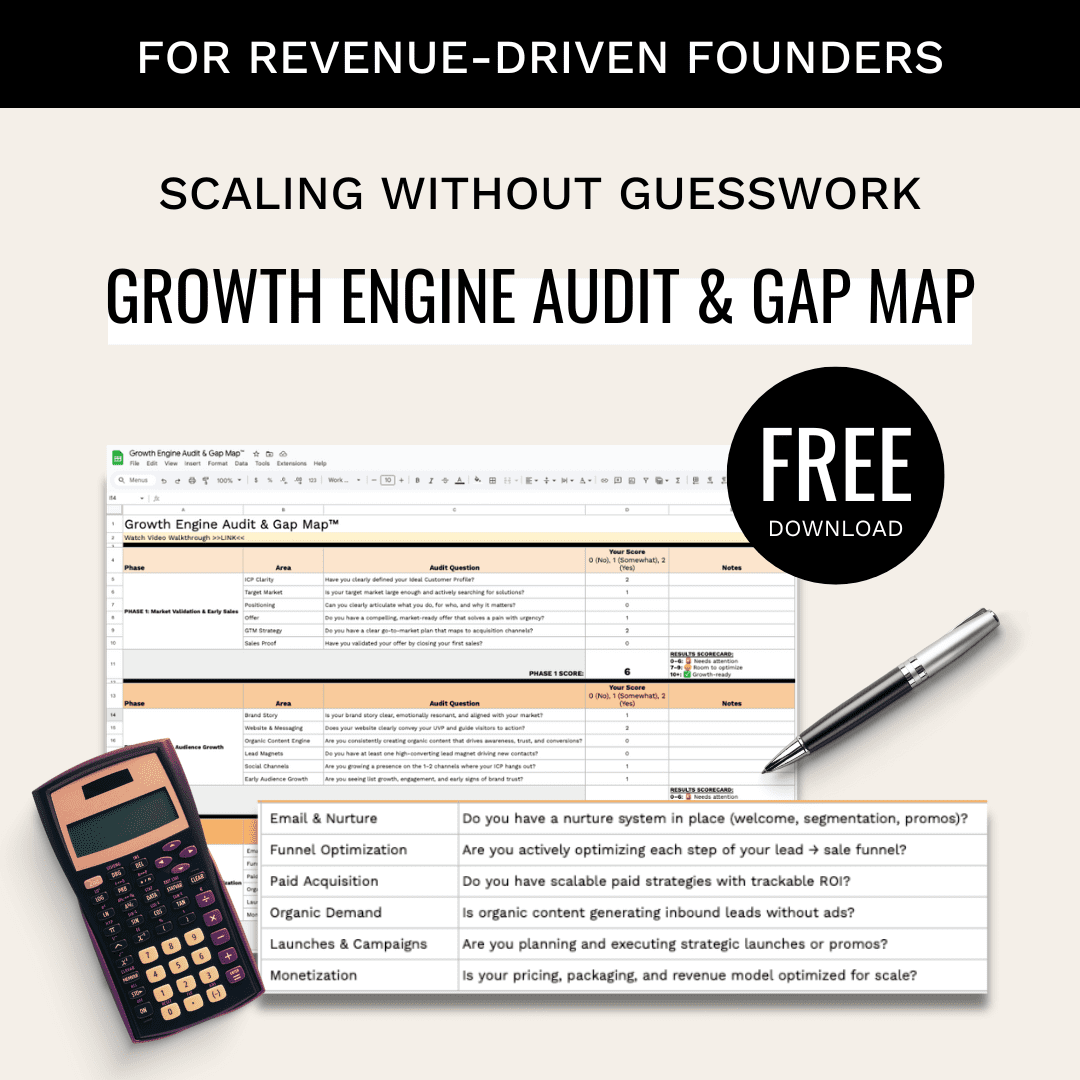
Join The Convergence Newsletter today to unlock the Growth Engine Audit & Gap Mapâ„¢, your first step to building a predictable, scalable revenue engine. Within the newsletter, you’ll get founder-tested growth strategies, data-backed marketing playbooks, and tactical insights that we share exclusively with this community of startup leaders who are serious about turning clarity into traction, and traction into revenue.

Subscribe below.
HI, I’M LILLIAN PIERSON.
I’m a fractional CMO that specializes in go-to-market and product-led growth for B2B tech companies.
Apply To Work Together
If you’re looking for marketing strategy and leadership support with a proven track record of driving breakthrough growth for B2B tech startups and consultancies, you’re in the right place. Over the last decade, I’ve supported the growth of 30% of Fortune 10 companies, and more tech startups than you can shake a stick at. I stay very busy, but I’m currently able to accommodate a handful of select new clients. Visit this page to learn more about how I can help you and to book a time for us to speak directly.
Get Featured
We love helping tech brands gain exposure and brand awareness among our active audience of 530,000 data professionals. If you’d like to explore our alternatives for brand partnerships and content collaborations, you can reach out directly on this page and book a time to speak.
Join The Convergence Newsletter
See what 26,000 other data professionals have discovered from the powerful data science, AI, and data strategy advice that’s only available inside this free community newsletter.
By subscribing you agree to Substack’s Terms of Use, our Privacy Policy and our Information collection notice

TURN YOUR GROWTH GAPS INTO PROFIT CENTERS

From roadblocks to revenue: it all starts here. Get your free Growth Engine Audit & Gap Mapâ„¢ now to uncover the tangible growth opportunities that are hiding in plain sight.

IF YOU’RE READY TO REACH YOUR NEXT LEVEL OF GROWTH

The AI-Native Growth Assessment

Free · 5 Minutes
Most startups are using AI. Very few are AI‑native.

Is Your Startup Falling Behind Its AI-Native Competitors?

Take the 5-minute assessment to see how your GTM engine stacks up, where you’re losing ground, and what to fix first. Get:
Your AI-Native Growth Score (0–100)
A benchmark against peer startups
The one constraint costing you the most leverage
A sprint-by-sprint 90-day AI-native growth build plan
SEE HOW YOU STACK UP
Built from research with 42+ B2B founders
By Lillian Pierson, P.E. · Trusted by Microsoft, Dell & Intel
Sample result: AI-Native Growth Score, benchmarked
Get your score immediately