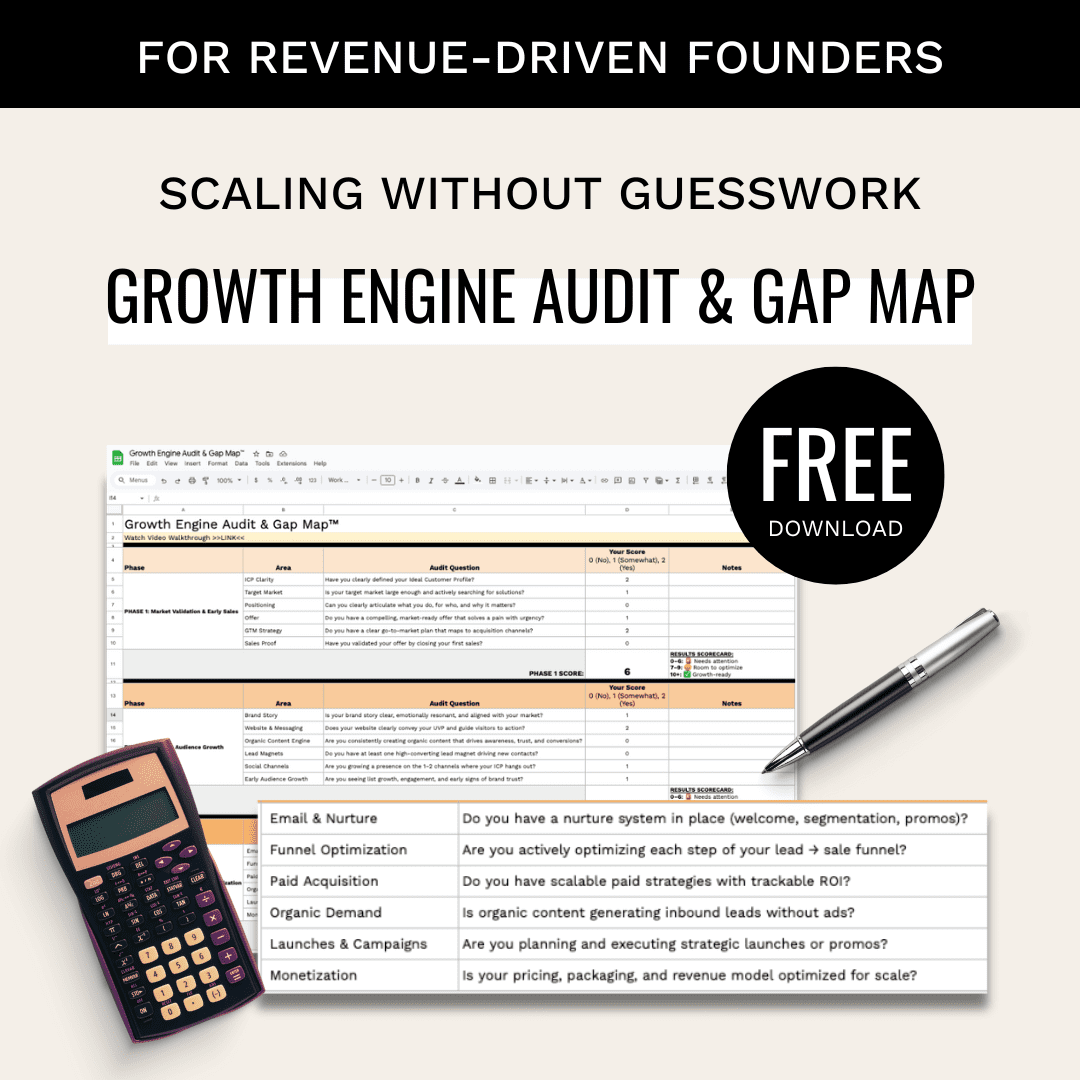


When picking the right GTM engineering tool in 2026, focus on these four critical areas: orchestration, data quality, attribution, and integration depth. Why? Because they directly impact your ability to align teams, clean your data, measure revenue impact, and connect your tech stack without creating silos.
Here’s the big picture:
- Orchestration ensures timely, targeted actions across channels.
- Data quality creates reliable "golden records" for accurate insights.
- Attribution ties actions to revenue, helping you understand what works.
- Integration depth avoids broken connections and messy data duplication.
With rising Customer Acquisition Costs (CAC) and slower growth, choosing the right tool isn’t optional – it’s survival. Below, we break down the top tools and how they stack up in these areas.
Quick Comparison
| Tool | Strengths | Weaknesses | |
|---|---|---|---|
| SalesboxAI | AI-driven advertising, strong attribution capabilities | Focused on top/mid-funnel; limited orchestration | |
| 6sense | Multi-channel orchestration, CRM-ad integration | API limitations for real-time decisions | |
| Openprise | No-code orchestration, real-time data validation | Learning curve for advanced automation workflows |
Key takeaway: Match the tool to your team’s needs and technical skills. For example, if data silos are your bottleneck, look for strong identity resolution. If you lack engineering support, prioritize tools with low-code or real-time triggers.
1. SalesboxAI
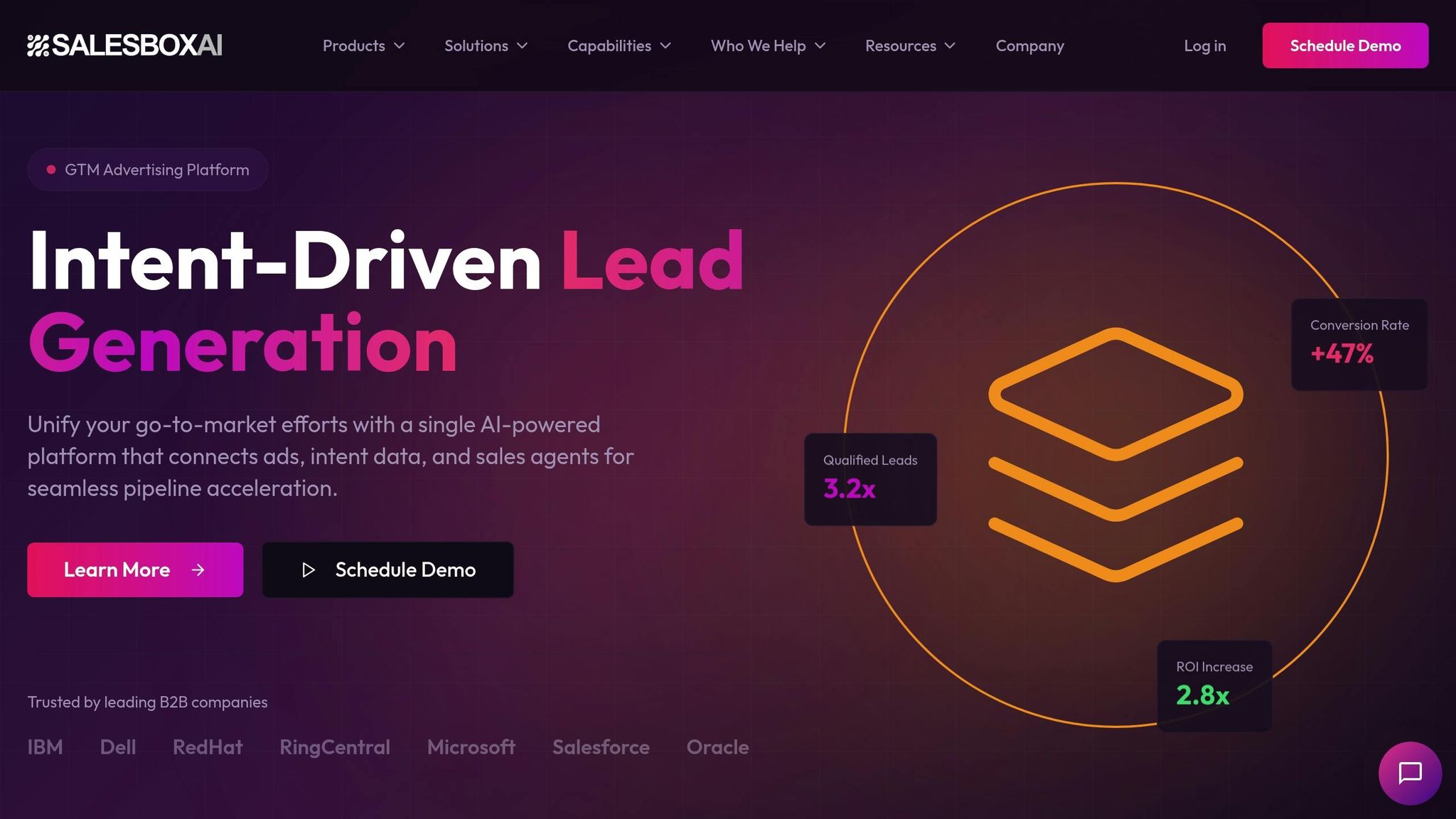
SalesboxAI brings together advertising, intent signals, and qualification into a seamless workflow [4]. Instead of handling each phase of the buyer journey as separate steps, it links AI-driven advertising at the top of the funnel with mid-funnel qualification through autonomous AI SDR agents that engage with prospects consistently [4]. This integration creates an efficient process, paving the way for a closer look at its orchestration, data quality, and attribution capabilities.
Orchestration
Acting as the command center for go-to-market (GTM) strategies, SalesboxAI handles everything from identifying target accounts to scheduling meetings. It even pinpoints key personas within buying committees who are actively researching solutions. By integrating smoothly with CRM systems and marketing automation tools, it ensures that intent signals trigger immediate actions across your tech stack [4]. This tight integration enhances data connectivity and simplifies workflows across platforms.
Data Quality
SalesboxAI focuses on engaging the entire buying committee. It merges third-party intent data, advertising engagement, and conversation signals into a single, unified view of buyer readiness. The results speak for themselves – 68% of leads transition into sales conversations, and users have reported a 3.2x boost in pipeline velocity [4].
Attribution
With its strong data consolidation, SalesboxAI takes performance measurement to the next level with advanced attribution. It goes beyond surface-level metrics, offering clear insights into how pipeline and revenue are impacted [4]. By prioritizing qualified opportunities and revenue over top-of-funnel activity, the platform has helped users cut the cost per qualified opportunity by 47% [4]. This focus ensures that every effort is tied to meaningful outcomes.
2. 6sense
6sense offers a comprehensive platform designed to support account-based strategies by seamlessly connecting key CRM and advertising systems. This integration helps businesses identify, engage, and convert target accounts more efficiently [8]. Let’s break down how 6sense leverages orchestration and integration to enhance its account-based approach.
Orchestration
The platform excels in managing audiences across multiple channels. By linking advertising platforms with CRM data, 6sense empowers teams to run synchronized, multi-channel campaigns. This reduces manual effort and ensures a more cohesive approach to customer engagement.
Integration Depth
6sense provides robust connections with leading CRM and advertising platforms, enabling teams to coordinate campaigns across various touchpoints and maintain comprehensive account visibility. While API limitations can sometimes pose challenges for real-time decision-making, the platform’s integrations have noticeably improved pipeline efficiency.
sbb-itb-e8c8399
3. Openprise
Openprise steps into the spotlight with its cutting-edge approach to orchestration and data quality. This no-code orchestration platform is designed to unify fragmented GTM systems, making it a go-to solution for teams like RevOps, MarOps, SalesOps, and DataOps [7]. By consolidating these systems, Openprise helps organizations break free from siloed tools and build a cohesive data ecosystem.
Orchestration
Openprise’s Enterprise MCP introduces "Agentic Orchestration", a feature that transforms data into automated actions [9]. With a low-code interface, teams can design and manage intricate workflows without needing deep technical expertise. Adding to its ease of use, AI Copilots employ natural language processing to automatically create pipelines, connectors, and data transformations [9]. This makes it easier for teams to streamline operations and act on data efficiently.
Data Quality
When it comes to data quality, Openprise takes a proactive stance. Its Protocols feature validates data in real time, ensuring that flawed or incomplete information never makes it to databases or reporting tools [10][11]. The Real-Time Transformations feature goes a step further by correcting, filtering, or customizing data as it flows through pipelines, maintaining consistency across all connected systems [10]. To top it off, Openprise’s identity resolution capability merges data from websites, apps, and other sources, delivering a unified view of each customer.
Integration Depth
Openprise simplifies multi-platform integrations by processing raw data and seamlessly linking key systems [7]. Whether it’s CRM, marketing automation platforms, data warehouses, or advertising tools, Openprise ensures smooth connections, making it easier for businesses to manage their data and operations effectively.
Strengths and Weaknesses
Every GTM tool brings its own set of strengths and challenges, especially in areas like orchestration, data quality, attribution, and integration. Understanding these nuances helps align tools with your team’s specific requirements.
Here’s a breakdown of the key advantages and limitations:
| Tool | Pros | Cons |
|---|---|---|
| ZoomInfo (Operations/Studio) | Features GTM Studio for AI-powered automation; excels in deduplication, cleansing, and enrichment across 260+ million contact profiles [13]. | The platform’s complexity, with multiple products like Copilot and Studio, can lead to a steep learning curve. Pricing starts at $15,000–$30,000+ annually [13][15]. |
| HockeyStack | Tracks the buyer journey end-to-end with AI tools (Odin/Nova) that deliver insights in plain English; consolidates GTM data into a single source of truth [12]. | Custom pricing requires a demo, and setup can be time-intensive [12]. |
| Cognism | Delivers phone-verified "Diamond Data", boasting twice as many mobile numbers in the U.S.; ensures strict GDPR/CCPA compliance across 13 countries [12][15]. | Focused on intelligence and prospecting rather than comprehensive journey orchestration; pricing details are unavailable publicly [12]. |
| Adobe Marketo Measure | Excels in "every-touch" attribution, capturing online and offline interactions across 100+ touchpoints; integrates natively for a complete view of buyer activity [14]. | Primarily geared toward attribution, which may necessitate using the broader Adobe/Marketo suite for full execution capabilities [14]. |
| Openprise | A no-code platform with AI-driven orchestration using natural language processing; real-time data validation through Protocols ensures clean data entry [9][10][11]. | Teams unfamiliar with automated workflows may need time to adjust to Enterprise MCP’s Agentic Orchestration [9]. |
This comparison sheds light on the practical considerations when choosing the right tool for your needs.
"If users cannot explain why a play triggered, they eventually stop acting on it." – Marilyn Starkenberg, 180ops [2]
When selecting a tool, prioritize features like explainability, warehouse-native efficiency, or comprehensive attribution to unlock actionable revenue insights across your GTM efforts [2].
Conclusion
Choose a GTM tool that directly addresses your team’s specific challenges. For example, if scattered data is slowing your progress, consider a CDP with strong identity resolution capabilities. On the other hand, if your campaigns are taking too long to launch, look into a warehouse-native CEP that allows marketers to act without waiting on engineering support [16].
Match your choice to your team’s technical skills. Teams proficient in SQL and APIs can benefit from warehouse-native tools that reduce data duplication costs. Meanwhile, marketing teams that need more independence should focus on platforms offering real-time behavioral triggers that don’t rely on engineering resources [16]. This approach ensures the tools you pick align with both your team’s capabilities and integration needs.
"The race to 2026 in B2B technology will not be won by the team with the most logos on their ‘stack’ page. It will be won by the team with the clearest view of their customer." – Conor Snell, demandDrive [6]
When evaluating tools, prioritize integration depth over an extensive feature list. Always run a "connection test" to confirm the tool works seamlessly with your central CRM and avoids creating isolated data silos [6]. The FRIC framework can help guide your decision: focus on tools with strong Focus (solving a specific problem), Redundancy (intentional overlap where it adds value), Interoperability (API-first design), and minimal Coupling (fewer dependencies) [1].
Currently, about 20% of U.S. marketing budgets are allocated to data [3]. The goal isn’t to keep adding tools but to create a unified revenue system that integrates orchestration, data quality, attribution, and deep connections. When teams can trace data lineage, understand why triggers fire, and measure revenue impact, tool adoption becomes a natural outcome [2].
FAQs
How do orchestration and integration depth influence the effectiveness of GTM tools?
Orchestration ensures that your GTM tools operate in harmony, transforming scattered systems into a cohesive, efficient engine. A capable GTM platform can automate critical actions across marketing, sales, and customer success in real-time. Whether it’s routing leads, updating opportunities, or launching follow-up campaigns, these automations minimize manual tasks, accelerate workflows, and keep teams aligned by providing everyone with consistent, up-to-date buyer data.
Integration plays a key role here, especially when it allows tools to connect natively and share data without the need for custom coding. Platforms offering well-built, pre-integrated connections enable seamless data flow between CRMs, analytics tools, and other systems. This not only preserves data quality but also avoids unnecessary delays. In contrast, shallow integrations can lead to syncing problems and added operational complexity. Together, effective orchestration and deep integrations pave the way for better ROI, quicker decisions, and more precise revenue tracking.
How can I choose a GTM tool that fits my team’s technical skills?
To pick the right GTM tool, start by evaluating your team’s technical skills. If your team is comfortable with coding, APIs, and managing schemas, focus on tools that provide advanced features like SDKs, custom SQL transformations, and version-controlled pipeline management. On the other hand, if your team prefers a more straightforward approach, look for platforms with low-code editors, drag-and-drop workflows, and pre-built connectors that simplify the process.
Practical considerations are key – specifically ease of setup and the learning curve. Tools with complicated permissions or API configurations can slow down teams without technical expertise. In such cases, prioritize platforms with user-friendly interfaces and well-organized documentation. Integration capabilities are another critical factor. If your team already relies on a cloud data warehouse, choosing a tool that connects seamlessly to it can save both time and effort by reducing the need for custom ETL processes.
Lastly, think about operational support. Tools with built-in features like monitoring, automation, and active user communities can help less-technical teams get up to speed quickly. Meanwhile, highly customizable platforms might demand more engineering resources. Aligning the tool’s complexity with your team’s technical capabilities ensures a smoother implementation process and sets the stage for long-term success.
Why is maintaining high data quality important when selecting a GTM engineering tool?
High-quality data serves as the backbone of any effective GTM (Go-to-Market) strategy. It provides the accuracy needed for actionable insights, dependable automation, and seamless workflows – key elements that drive measurable business growth. On the flip side, poor data quality can lead to costly errors, misaligned teams, and misguided decisions, all of which can derail success.
Focusing on data quality when choosing your tools can significantly enhance team coordination, sharpen customer targeting, and support smarter decision-making. This approach not only boosts revenue potential but also streamlines operational efficiency.