


Think demand generation is just about campaigns? It’s not. In 2026, a great demand gen consultant builds AI-driven systems that turn your data into predictable revenue. Instead of running isolated campaigns, they focus on creating scalable frameworks that grow your business long-term – even when you’re not in the room. Lillian Pierson is a standout in this field, helping B2B SaaS and AI startups solve growth challenges and achieve results like 200x user growth in 90 days or generating 10,000 MQLs without paid ads.
Here’s what makes demand gen consultants essential today:
- They create systems, not just campaigns: AI workflows, multi-channel strategies, and lifecycle automation.
- They prioritize demand creation: Building trust and awareness before buyers even start searching.
- They focus on metrics that matter: Pipeline velocity, LTV vs. CAC, and revenue impact – not vanity stats.
- They align sales and marketing: Ensuring every lead is nurtured and qualified in real-time.
Lillian Pierson’s AI-native approach and proven track record make her a go-to expert for startups looking to scale. Whether you’re stuck with rising CAC, inconsistent pipelines, or competitors outpacing you, a demand gen consultant like Lillian can help you build systems that deliver sustainable growth.
Our Simple 3 Step B2B Demand Generation Strategy for 2026
sbb-itb-e8c8399
What a Demand Gen Consultant Owns in 2026
5 Core Responsibilities of a Demand Gen Consultant in 2026
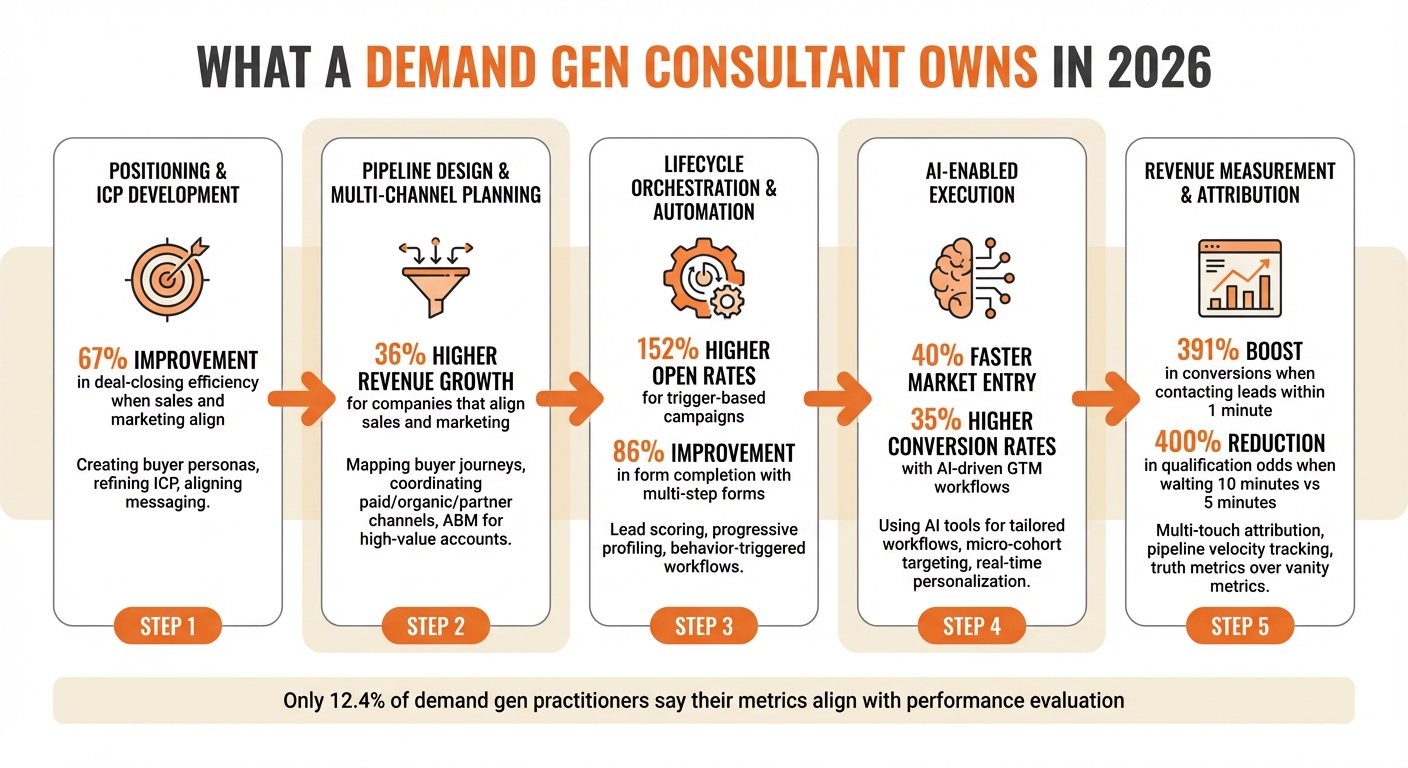
A demand gen consultant builds systems that transform your product into consistent revenue. Their work spans five main areas: positioning, pipeline design, lifecycle orchestration, AI-driven execution, and revenue measurement.
Positioning and Ideal Customer Profile Development
Before launching any campaigns, a demand gen consultant starts with positioning. They assess your brand to spot "leaky buckets" – areas where your messaging confuses buyers or your targeting misses the mark [4][1]. This process includes creating detailed buyer personas, refining your Ideal Customer Profile (ICP), and aligning messaging with insights from sales calls.
When sales and marketing align at this stage, deal-closing efficiency improves by 67% [3].
Pipeline Design and multi-channel campaign planning and customer acquisition
Once positioning is locked in, the consultant builds a full-funnel pipeline system. This involves mapping buyer journeys, coordinating campaigns across paid, organic, and partner channels, and using Account-Based Marketing (ABM) for high-value accounts [3][4]. Top consultants follow agile workflows – dedicating one day to planning, four to execution, and one to review [3]. Companies that align sales and marketing for pipeline growth achieve 36% higher revenue growth rates [3].
Multi-channel planning also requires identifying which channels deliver the best results. A skilled consultant ensures communication is aligned and attribution is accurate, making the channels work together rather than compete.
Lifecycle Orchestration and Marketing Automation Setup
With a solid pipeline in place, the consultant focuses on converting interest into engaged leads through automation. They manage platforms like HubSpot or Marketo to nurture visitors into qualified pipeline. This includes lead scoring, progressive profiling, and behavior-triggered workflows [3][4]. The numbers speak for themselves: trigger-based campaigns see 152% higher open rates than batch-and-blast emails [3], and multi-step forms improve completion rates by 86% for complex B2B purchases [3].
"There’s a market shift from campaigns to systems… building relationships with customers on a much more timely basis by using AI." – Lillian Pierson [5]
AI-Enabled Execution
To refine the system further, consultants use AI tools to speed up and optimize execution. With platforms like Cursor and Windsurf, they create tailored workflows that enhance both efficiency and conversion rates [5].
"The rise of the Vibe coder… has changed who gets to build. You can actually just, with your own two hands, build the tools you need to get the job done." – Lillian Pierson [5]
For example, Humanic, a SaaS company, uses a reasoning engine to identify "micro-cohorts" from behavioral data. This allows them to run activation campaigns with personalized copy, boosting retention with real-time insights [5]. AI-driven GTM workflows enable 40% faster market entry and 35% higher conversion rates compared to traditional methods [6].
Between March and September 2025, Lillian Pierson collaborated with Matt Brown, Head of Global Growth at SingleStore, to develop AI-native GTM strategies. This effort helped a VC-backed SaaS company achieve 200x user growth in just 90 days [1][2].
Revenue Measurement and Attribution
Finally, a demand gen consultant focuses on tracking meaningful metrics like marketing-sourced pipeline, pipeline velocity, and ROI. They implement multi-touch attribution models and ensure seamless data flow between your CRM and automation tools [3][4]. This approach moves the focus from vanity metrics like clicks and MQLs to "truth metrics" such as qualified pipeline value, blended CAC, and payback periods [7].
Currently, only 12.4% of demand gen practitioners say their metrics align with how their performance is evaluated [8]. A great consultant bridges this gap by establishing shared "North Star" metrics and Service Level Agreements (SLAs) with sales. For example, they ensure demo leads are contacted within five minutes or that Sales Authenticated Leads (SALs) are processed within two business days [7]. Speed is critical: contacting a lead within one minute can boost conversions by 391%, while waiting 10 minutes instead of five reduces the odds of qualifying the lead by over 400% [7].
Between March and September 2025, Lillian Pierson also helped a Series F database company generate over 10,000 MQLs using organic demand generation systems – without spending a dime on ads [1].
Each of these elements contributes to a data-driven demand generation system designed for long-term growth.
Is Your Startup Falling Behind Its AI-Native Competitors?
What Separates a Great Demand Gen Consultant from a General Marketer
General marketers focus on running campaigns and analyzing click-through rates. A demand gen consultant, on the other hand, takes it a step further by creating scalable revenue systems. This distinction becomes clear in three key areas: their approach to pipeline generation, their collaboration with sales teams, and their strategic role beyond simple execution.
Building Repeatable Pipeline Systems
General marketers often work in a campaign-by-campaign mode, manually launching initiatives without tying them into a broader strategy. A demand gen consultant, however, designs systems that are automated and scalable, leveraging AI for real-time triggers and milestone-based personalization [5]. This approach replaces manual efforts with workflows that adapt automatically to customer behavior.
"There’s a market shift from campaigns to systems… building relationships with customers on a much more timely basis by using AI."
- Lillian Pierson [5]
By focusing on systems rather than one-off campaigns, demand gen consultants create a foundation for stronger collaboration across revenue-driving teams.
Partnering with Revenue and Sales Teams
Demand gen consultants don’t just build systems – they work closely with sales and revenue teams to ensure alignment. Acting as GTM Engineers or Fractional CMOs, they prioritize unifying marketing, branding, and sales efforts to drive growth [2]. This alignment is critical in solving common challenges like fragmented data, siloed operations, and flawed attribution models, all of which can derail conversions [5]. With a strong data foundation, even high-cost ad experiments can succeed as algorithms are better equipped to optimize outcomes.
For example, between 2024 and 2025, Matt Brown, Head of Global Growth at SingleStore, collaborated with Lillian Pierson to refine go-to-market strategies. He described the partnership as "transformative" for the brand [2].
Strategic Oversight Beyond Execution
Unlike general marketers who focus on tactics, demand gen consultants take a broader view, shaping go-to-market strategies and driving long-term growth [1]. They start by assessing your brand and marketing fundamentals to ensure a solid foundation [2]. Their role extends beyond building systems; they provide strategic oversight to ensure every initiative directly contributes to predictable, scalable revenue. This means prioritizing metrics like Customer Acquisition Cost (CAC) and lead conversion speed over surface-level activity tracking [1].
"Traditional CMOs build campaigns. Lillian builds AI‑native systems that convert your data edge into predictable revenue."
- Lillian Pierson [1]
For instance, in a three-month campaign ending in 2025, Kevin Allen, Manager of IBM Developer Content Acquisition, tapped into Lillian Pierson’s systematic outreach expertise. The result? Over 1 million views and 45,000 engagements for IBM’s developer content [2]. Achieving this level of impact requires a strategic approach to audience targeting, messaging, and distribution – not just tactical execution.
The evolution from a general marketer to a demand gen consultant is about shifting from manual, campaign-driven efforts to AI-powered systems that scale. It’s the difference between generating activity and delivering predictable, scalable revenue.
When to Hire a Demand Gen Consultant
Signs You Need Demand Gen Support
If your business growth slows down and seems tied to your constant involvement, it might be time to consider hiring a demand gen consultant. A clear red flag is when your pipeline relies entirely on your direct input, or your Customer Acquisition Cost (CAC) keeps climbing. These issues often signal the need for external expertise.
The most common tipping point is during the transition from $1M to $4M in annual revenue. At this stage, the scrappy, hands-on approach that worked early on needs to evolve into a scalable system [2]. Technical founders often feel this pain the most. Tony Garvan, Founder & CEO of SheetRocks, shared his experience:
"As a technical founder, I was pretty naive around what it really would take to get a big product to market. Working with Lillian was really, really critical in propelling our business to the next level" [2].
Other signs include disjointed sales and marketing efforts or inconsistent lead quality. If your campaigns fail to show a clear connection to revenue, or if your sales team complains about poor lead quality, a demand gen consultant can help identify and fix these problems before you waste more resources scaling ineffective systems.
Recognizing these warning signs is the first step toward bringing in the expertise you need.
Benefits of Bringing in External Expertise
Once you’ve identified the need, hiring a demand gen consultant offers several advantages. Unlike general marketers, these consultants specialize in creating scalable systems that ensure predictable revenue growth.
Speed, expertise, and cost efficiency are some of the biggest benefits. Consultants come equipped with proven strategies and can hit the ground running, saving you the time and effort of recruiting and onboarding a full-time hire. For example, Kam Lee of Finetooth Analytics implemented a new growth strategy with a consultant and, within six months, secured 15 contracts worth $310,000 and pre-sold $60,000 in annual contracts [2]. Achieving that level of execution speed with an in-house team would be a significant challenge.
Another advantage is access to advanced AI and automation expertise that may not exist within your current team. With approximately 44% of tech and marketing skills expected to become obsolete by 2027 [10], a demand gen consultant ensures you’re not relying on outdated methods. Lillian Pierson’s fractional CMO model, for instance, focuses on AI-driven growth strategies that leverage data for consistent revenue [1].
The cost savings are also noteworthy. In the United States, the average full-time CMO salary ranges between $304,669 and $429,040 [1]. A fractional consultant provides executive-level strategy at a fraction of the cost, with flexible engagement periods (typically 6–12 months). This allows you to test strategies and validate market fit before committing to a permanent hire. For startups with annual marketing budgets over $1 million, this approach optimizes resources without adding the overhead of full-time salaries and benefits [1][9].
If these solutions align with the challenges you’re facing, consider booking a consultation to see how a demand gen consultant can reshape your growth strategy and revenue pipeline.
Why Lillian Pierson Stands Out as a Demand Gen Consultant
Fractional CMO Services for Tech Startups
Lillian Pierson offers something rare in the world of demand generation consulting: a deep understanding of both technical and marketing landscapes. As the founder of Data-Mania, she has firsthand knowledge of the hurdles AI, analytics, and B2B SaaS founders face when trying to communicate the value of their products. Her fractional CMO services for tech startups are tailored to help founders transform their complex technical capabilities into clear, revenue-driving systems. This approach aligns seamlessly with the AI-native demand generation framework, creating a strong foundation for scalable revenue growth.
What truly sets her apart is her ability to design AI-driven growth systems rather than relying on isolated campaigns. Matt Brown, Head of Global Growth at SingleStore, encapsulates her impact:
"In data & AI, it is a rare find to come across someone as dedicated and adept as Lillian Pierson. Her partnership with us has been nothing short of transformative."
This strategic, systems-focused methodology has consistently translated into tangible results, proving the power of combining technical expertise with smart marketing strategies.
Experience Building Scalable Revenue Systems
Lillian’s fractional CMO services go beyond surface-level tactics, delivering measurable revenue growth through a hands-on, systematic approach. Her expertise has helped startups transition from founder-led sales to predictable, scalable pipelines. With a track record of generating over $7 million in direct revenue for her clients, she has built systems that reflect the hallmarks of an effective demand gen consultant.
For example, her work with a VC-backed data SaaS startup involved creating full-funnel systems that aligned marketing and sales efforts, driving significant revenue growth. Her approach includes advanced techniques such as:
- Progressive profiling and lead scoring to streamline sales handoffs
- A/B tested landing pages that have delivered conversion lifts of 40% or more, aligning with Google Demand Gen best practices [13]
- Shared CRM visibility and feedback loops to enhance lead quality and accelerate pipeline velocity
This structured, results-oriented focus has made her a trusted partner for startups looking to build scalable revenue systems.
AI-Native and Data-Driven Approach
In today’s market, the best demand gen consultants leverage AI tools to refine execution and measurement, and Lillian Pierson’s background in data science gives her a distinct edge. She uses AI workflows like Google’s Performance Planner for budget simulations and dynamic product feeds for personalized outreach. Her strategies also include offline data tracking to ensure accurate attribution across intricate buyer journeys [12].
Her technical expertise enables her to track advanced KPIs such as pipeline influence and ROI [11], building dashboards that directly link demand generation efforts to revenue outcomes. But she doesn’t stop at surface-level metrics. By employing predictive modeling for ideal customer profile (ICP) development and campaign optimization, she ensures every marketing dollar is spent strategically, guided by data rather than guesswork.
As Lillian herself explains:
"Traditional CMOs build campaigns. Lillian builds AI-native growth systems that help tech founders turn their data and technology advantage into predictable, scalable revenue" [1].
For AI-focused B2B SaaS founders, Lillian Pierson’s combination of marketing savvy and technical know-how makes her an invaluable partner who truly understands the unique challenges of their industry. Her ability to bridge the gap between technology and revenue generation is what sets her apart.
Conclusion: Deciding Whether to Hire a Demand Gen Consultant
Why a Demand Gen Consultant Might Be the Right Move
Bringing in a demand gen consultant can transform how your startup approaches growth. For one, it allows you to move beyond founder-led marketing to implement scalable systems that drive consistent revenue[2].
An experienced consultant tailors a 6–12 month strategy specifically for your business goals[2]. This is especially useful for AI and tech startups, where a consultant can bridge the gap between complex technical offerings and market needs.
Another major advantage is gaining access to seasoned leadership without the hefty cost of hiring a full-time CMO or fractional CMO services, which can range from $304,669 to $429,040 annually[1]. For instance, one startup saw a 10x increase in website traffic, doubled its LinkedIn followers in six months, and closed a $100,000 deal – all thanks to the efforts of a skilled consultant[2]. The right consultant doesn’t just guide strategy – they deliver measurable results.
Taking the Next Step
If your startup is grappling with unpredictable pipelines, rising customer acquisition costs, or stiff competition despite having a strong product, it might be time to consider a demand gen consultant. These professionals use advanced tools, including AI marketing systems, to create workflows that deliver steady revenue growth.
A consultant not only helps refine your strategy but ensures your marketing spend works harder for you. With AI-powered workflows, they streamline operations across multiple channels, boosting efficiency and results.
Lillian Pierson offers flexible options to meet startups at different stages. These range from one-hour Power Hour sessions for early-stage insights to comprehensive Fractional CMO services for businesses with annual marketing budgets over $1 million[1].
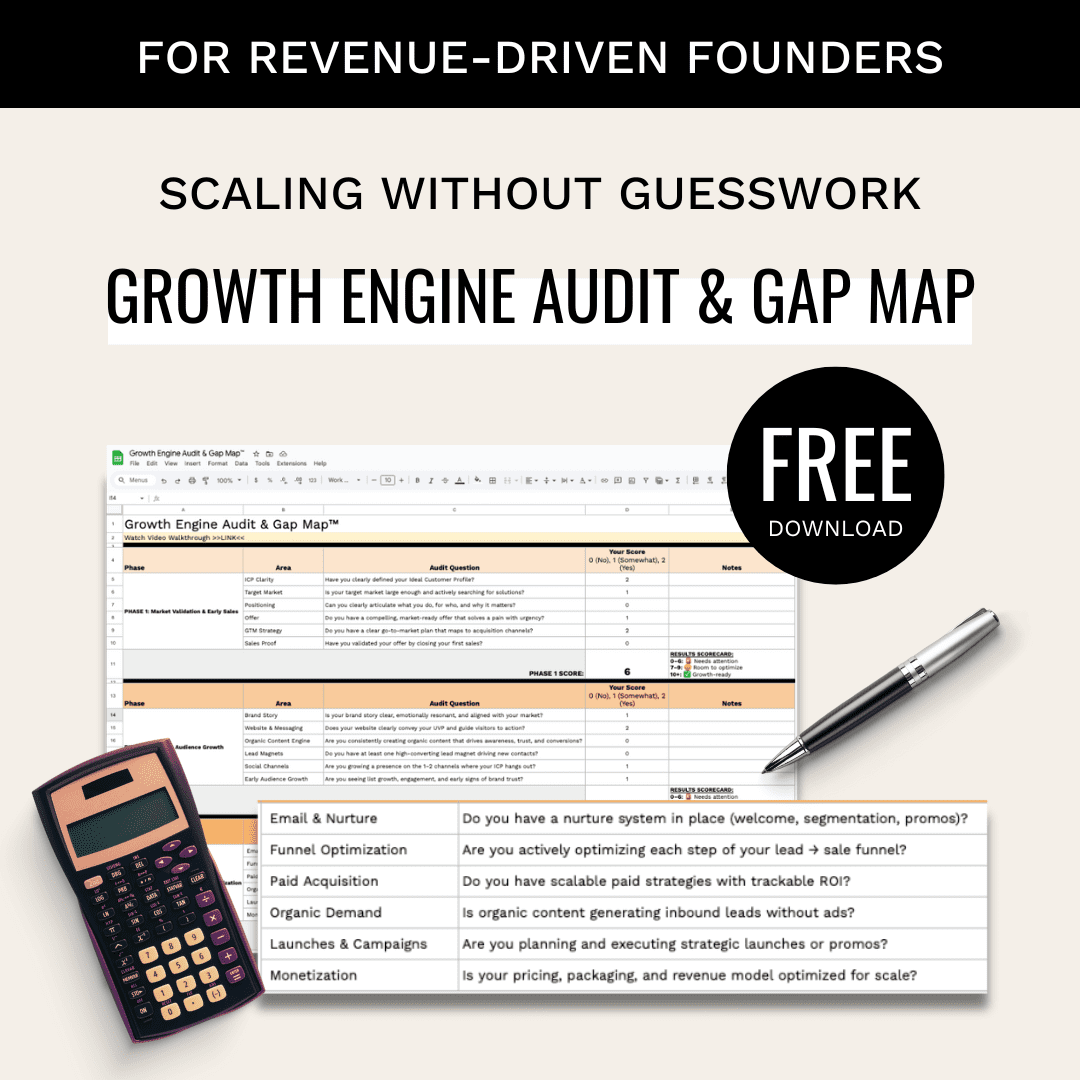
To explore how a demand gen consultant could benefit your business, you can schedule a free consultation with Lillian Pierson. During the session, she’ll perform a Growth Engine Audit to identify untapped opportunities and revenue gaps. As Tony Garvan, Founder & CEO of SheetRocks, shared:
"Working with Lillian was really, really, a critical part of us getting to the next level in our business. I would definitely recommend working with her."[2]
FAQs
What should I have ready before hiring a demand gen consultant?
To set the stage for a productive collaboration with a demand generation consultant in 2026, make sure you’ve got the basics covered. Start with a clear grasp of your pipeline, well-defined demand generation goals, and the key metrics that matter to your business. Know your target audience and messaging inside out, and ensure your systems – like CRM and marketing automation tools – are fully integrated. Lastly, a baseline level of data literacy across your team is essential. These elements will enable the consultant to fine-tune AI-powered workflows, streamline lifecycle orchestration, and build scalable pipeline systems that align with your growth objectives.
How fast can a demand gen consultant impact pipeline and revenue?
A demand generation consultant can help drive noticeable pipeline and revenue growth in just weeks or a few months. They do this by introducing AI-powered growth systems, ensuring messaging aligns with every stage of the customer journey, and building scalable, repeatable processes that suit your specific business goals.
What should I expect to see in a first 30-day demand gen consultant audit?
In the first 30 days, a demand generation consultant dives deep into your existing system, conducting a thorough audit to pinpoint weaknesses and inefficiencies. This process covers everything from your pipeline and messaging to targeting and metrics, ensuring everything aligns with your revenue objectives. They also evaluate the quality of your data, AI-powered workflows, and how well your marketing and sales teams are working together. The result? Clear, actionable insights that sharpen your strategy and lay the groundwork for a demand generation system that can grow predictably and sustainably.